
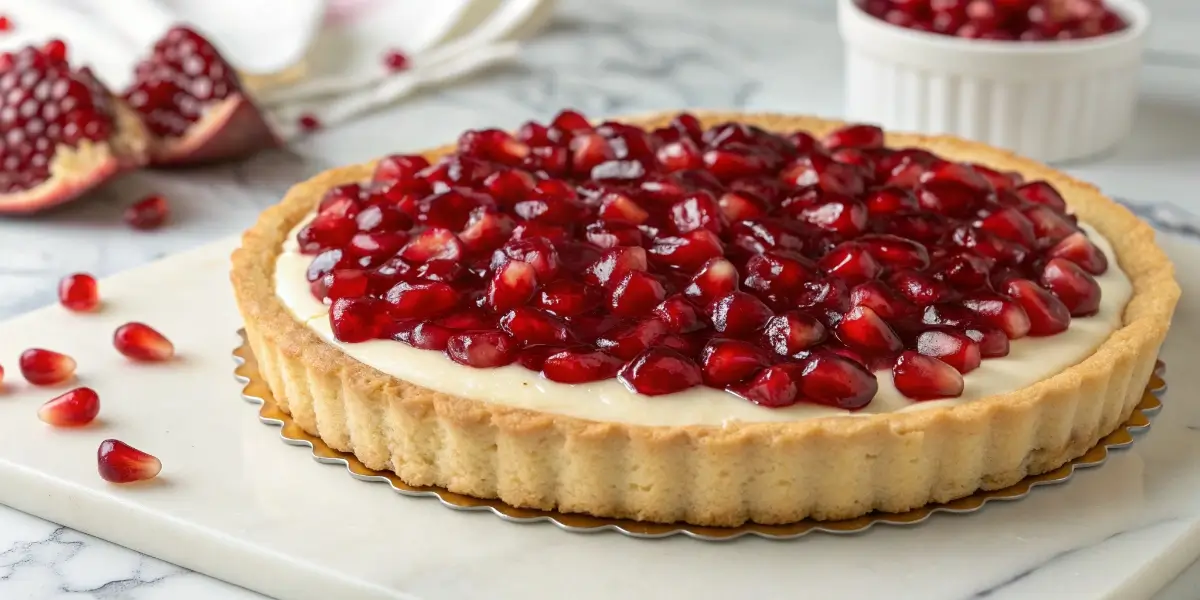
Pomegranate Cream Tart – A Refreshing Dessert for Every Season
Introduction
The Pomegranate Cream Tart is a dessert that strikes the perfect balance between elegance and comfort. With its golden, buttery crust and luscious cream filling topped with jewel-like pomegranate seeds, this tart captures the essence of both sweetness and tang. Whether you’re preparing for a festive dinner, an afternoon tea, or simply craving a fruity dessert that feels refreshing yet indulgent, this recipe delivers every time. It’s surprisingly simple to prepare and makes a stunning centerpiece for any table.
Table of Contents
What Makes a Pomegranate Cream Tart Special
The Perfect Blend of Sweet and Tart Flavors
At the heart of this dessert is the beautiful marriage between creamy sweetness and pomegranate’s natural tang. Pomegranates bring a refreshing, slightly tart note that balances the richness of the cream layer perfectly. When combined, they create a harmonious bite — creamy, crunchy, and fruity all at once. This unique flavor profile is what sets the pomegranate cream tart apart from heavier desserts like cheesecakes or chocolate pies.
The crisp pastry shell adds a delicate texture contrast. As you cut through, the layers hold together beautifully, ensuring each bite delivers a perfect mix of crumbly crust, smooth cream, and juicy fruit. The subtle flavor of the crust allows the pomegranate’s brightness to shine through, keeping the tart light yet indulgent.
Why Pomegranate is the Star Ingredient
Pomegranate isn’t just visually stunning; it’s packed with antioxidants, vitamin C, and natural sweetness. Its vibrant hue brings life to any dessert, transforming a simple tart into a showstopper. Using fresh pomegranate arils instead of processed juice ensures the flavor remains crisp and naturally balanced.
Beyond taste, the pomegranate’s texture plays a key role. Each seed bursts with juicy freshness, giving the dessert a delightful crunch that complements the creaminess beneath. Whether you serve it chilled for summer brunches or during cozy holiday dinners, the pomegranate cream tart never fails to impress.
Key Ingredients in a Pomegranate Cream Tart
Essential Components of Cream Tart Base
The foundation of any pomegranate cream tart begins with a perfect crust. Traditionally, a tart shell is made using simple ingredients — flour, butter, sugar, and a touch of salt. The secret lies in keeping the butter cold to achieve that flaky, crumbly texture that melts in your mouth. For a lighter version, you can use almond flour or gluten-free flour blends without losing flavor. Learn more about making delicious gluten-free bases on Gluten-Free Brioche Bread.
Once the crust ingredients are combined, the dough should rest before baking to prevent shrinking. Blind baking the crust — baking it partially before adding the filling — ensures it stays crisp and doesn’t turn soggy once the cream is added. Some bakers prefer brushing the baked shell with melted white chocolate or egg wash to seal the surface, keeping moisture out.
A good tart base should complement, not compete with, the filling. It acts as a delicate, buttery stage for the cream and pomegranate to shine. Whether you use traditional pastry or a crumb base made of crushed biscuits and butter, texture balance is key to the overall experience.
Best Dairy and Fruit Pairings for the Cream Layer
The cream filling is where the magic happens. The goal is to create a smooth, velvety layer that enhances the tartness of the pomegranate. Most recipes use a combination of heavy cream, mascarpone, or cream cheese for that rich and silky feel. For a lighter alternative, Greek yogurt or coconut cream also work beautifully while keeping the tart refreshing and dairy-flexible.
Sweeteners like honey or powdered sugar add a soft sweetness that doesn’t overpower the fruit. Vanilla extract or a touch of lemon zest can further lift the flavor. When it comes to the fruit layer, always choose fresh pomegranate arils for their crunch and natural juices — never the bottled syrup versions, which can make the dessert overly sweet.
You can also mix a spoonful of pomegranate juice into the cream filling for a lovely pink tint and added flavor depth. The final touch is arranging fresh arils generously over the top, giving the tart its iconic, jewel-toned beauty. For more fruity dessert inspiration, check out this lemon meringue pie recipe to explore how citrus balances sweetness in a similar way.
How to Make a Pomegranate Cream Tart from Scratch
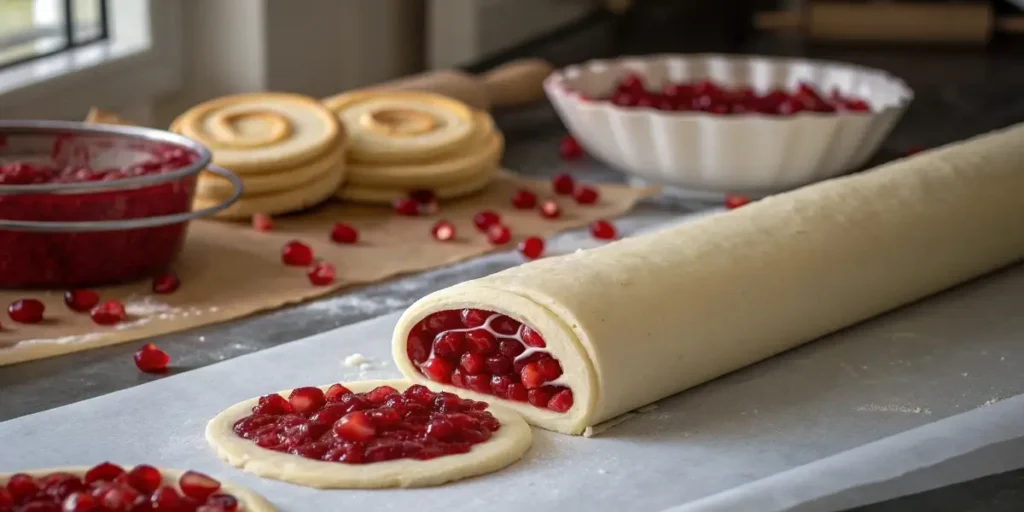
Step-by-Step Process for the Tart Shell
Creating a pomegranate cream tart from scratch may sound fancy, but the process is quite simple when broken down. The key lies in timing, temperature, and texture. Start by gathering your crust ingredients:
- 1 ¼ cups all-purpose flour (or almond flour for gluten-free option)
- ½ cup cold unsalted butter, cubed
- ¼ cup powdered sugar
- 1 egg yolk
- A pinch of salt
Cut the butter into the flour until the mixture looks like fine crumbs. Add the egg yolk and gently mix until it forms a soft dough. Avoid overmixing — that can make the crust tough instead of crumbly. Wrap the dough in plastic wrap and chill it for at least 30 minutes. This resting time helps the fats firm up, which ensures a flakier crust.
After chilling, roll out the dough evenly and press it into your tart pan. Trim any excess dough, prick the base with a fork, and line it with parchment paper. Fill the shell with pie weights or dried beans to prevent puffing. Bake at 350°F (175°C) for 15 minutes, remove the weights, and bake for another 10 minutes or until golden brown. Once done, let it cool completely before adding the filling.
A pro tip: brush the cooled shell lightly with melted white chocolate. It creates a thin barrier, keeping the crust crisp even after adding the cream. You can explore more about dessert shell baking techniques in this fluffy mini pancakes guide that also teaches balance in texture.
Whipping Up the Perfect Pomegranate Cream
Now comes the best part — preparing the cream layer. For this, you’ll need:
- 1 cup heavy whipping cream
- ½ cup mascarpone cheese or cream cheese
- 2 tablespoons powdered sugar
- 1 teaspoon vanilla extract
- 3 tablespoons fresh pomegranate juice
Whip the heavy cream until soft peaks form. In a separate bowl, mix mascarpone (or cream cheese) with sugar and vanilla until smooth. Gently fold the whipped cream into the cheese mixture, then add the pomegranate juice for a delicate pink hue. The goal is to achieve a thick, smooth consistency that spreads easily but holds its shape.
Once your crust has cooled, spoon in the cream mixture and spread it evenly. Top generously with fresh pomegranate arils. Chill for at least 2 hours before serving so the cream sets beautifully. The result is a smooth, dreamy tart that’s both refreshing and elegant.
For a no-bake twist, substitute the crust with crushed biscuits and butter, then chill instead of baking — a quick yet equally delicious version. Don’t miss our no-bake 4th of July desserts for more easy and creative sweet inspirations.
Tips for the Best Pomegranate Cream Tart Texture
How to Achieve a Crisp Yet Buttery Tart Crust
The foundation of a perfect pomegranate cream tart lies in mastering the crust. A crisp yet buttery texture ensures every bite melts in your mouth while providing a satisfying crunch. The secret? Temperature control. Always use cold butter and chilled water. This keeps the fat solid until baking, creating those flaky, airy layers.
Once your dough is mixed, avoid over-kneading—it develops gluten, making the crust tough. Instead, mix just until it comes together. Before baking, chill the rolled dough for at least 30 minutes to prevent shrinking in the oven. For an extra crisp finish, bake the shell fully before adding the filling—also known as blind baking.
After baking, let the crust cool completely. To avoid sogginess, brush a thin layer of melted white chocolate or egg wash before filling it with cream. The coating acts as a moisture barrier, ensuring that even after hours in the fridge, your tart shell stays crisp and golden. For more crust perfection ideas, check out this biscuit egg cheese casserole recipe to learn how heat and fat interact for that flaky texture.
Secrets for Silky, Smooth Pomegranate Cream Filling
When it comes to the cream, texture is everything. A great pomegranate cream should feel light, velvety, and slightly airy. Use chilled heavy cream and whip it until it forms soft peaks—overwhipping can lead to graininess. Blend it gently with mascarpone or cream cheese to keep that silky consistency.
Add your sweeteners gradually—powdered sugar works best because it dissolves easily without clumping. To incorporate flavor, mix in a small amount of fresh pomegranate juice or extract; this gives a soft blush tone and enhances the tart’s fruity taste. The result? A luscious filling that contrasts beautifully with the crust’s crunch.
When spreading the cream, use a spatula to smooth it evenly without deflating it. Top with fresh pomegranate arils just before chilling. This ensures the fruit remains juicy and vibrant, not watery. For other creamy dessert inspirations, you can explore this pistachio no-bake cheesecake that shares similar principles of smooth, stabilized fillings.
Creative Variations of Pomegranate Cream Tart
Mini Pomegranate Tarts for Parties and Events
When you’re hosting a gathering, mini pomegranate cream tarts can steal the show. They’re bite-sized, elegant, and easy to serve — no messy slicing required. These individual tarts follow the same recipe as the full-sized version but use mini tart pans or even muffin molds for portion control. The crust remains buttery and crisp, while the cream filling stays silky smooth.
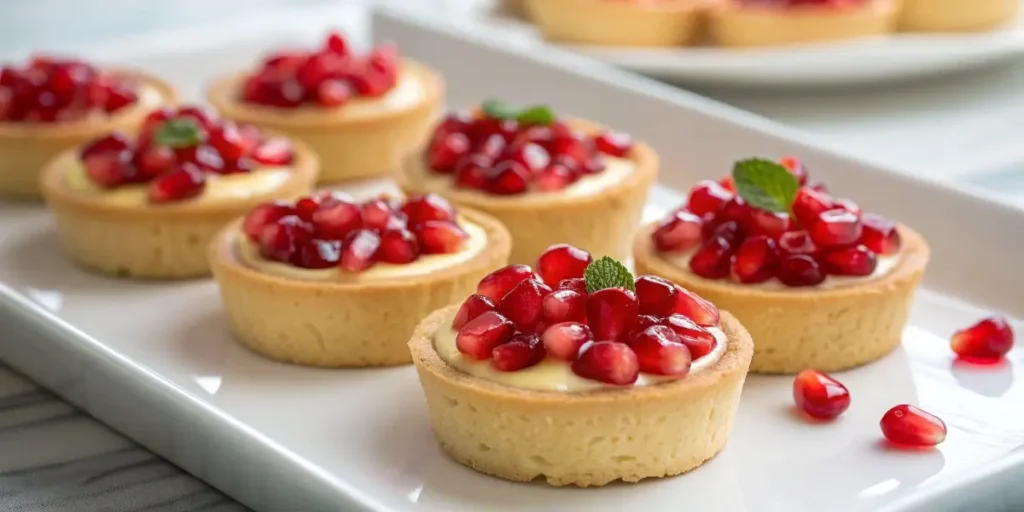
To make mini versions, reduce the baking time for the shells to about 10–12 minutes. Once cooled, fill each with pomegranate cream and chill for an hour. Garnish with a few pomegranate arils and a mint leaf for a beautiful pop of color. These little treats make an excellent choice for bridal showers, holiday buffets, or weekend brunches.
You can also personalize them with flavor variations — a drizzle of honey, a sprinkle of crushed pistachios, or even a layer of pomegranate jelly beneath the cream. Each variation offers a unique twist without compromising the tart’s light and refreshing nature. For more party-friendly dessert ideas, check out our easy mocktails that pair beautifully with mini tarts for non-alcoholic celebrations.
No-Bake Pomegranate Tart Options
If you prefer to skip the oven, a no-bake pomegranate cream tart is a fantastic alternative that’s quick, cool, and just as delightful. For the crust, mix crushed digestive biscuits or graham crackers with melted butter and press the mixture into a tart pan. Chill it in the refrigerator for 30 minutes until firm.
For the filling, use whipped cream blended with cream cheese, powdered sugar, vanilla extract, and a touch of pomegranate juice. Spread the mixture evenly over the crust, top with fresh arils, and refrigerate until set — about 2 to 3 hours. This version is perfect for hot summer days when you want a refreshing dessert without turning on the oven.
A drizzle of honey or melted white chocolate over the top adds elegance. You can also experiment with layering — alternate cream and pomegranate arils for a visually striking pattern. For a touch of indulgence, pair this no-bake tart with a light summer beverage like the virgin piña colada for a tropical twist that enhances its fruity flavor.
Health Benefits of Pomegranates in Desserts
Nutritional Value of Pomegranate
One of the best things about a pomegranate cream tart is that it isn’t just beautiful—it’s also packed with nutrients. Pomegranates are a powerhouse of antioxidants, vitamins, and minerals. Each ruby-red aril is loaded with vitamin C, potassium, and fiber, which support heart health and boost immunity. They also contain polyphenols and punicalagins—compounds known for their anti-inflammatory and antioxidant properties.
When used in desserts, pomegranates add natural sweetness without requiring excessive sugar. This makes your tart not only lighter but also more wholesome compared to artificially sweetened treats. They’re also low in calories, making the pomegranate cream tart a more balanced indulgence for those who like desserts but want to avoid heavy, calorie-rich options.
Adding fresh pomegranate juice to your cream also enhances flavor while infusing the dessert with beneficial nutrients. If you’re conscious of healthy cooking, explore more balanced recipes like this cottage cheese desserts collection that shows how nutritious ingredients can still make sweet dishes irresistible.
Why Pomegranate Desserts Can Be Surprisingly Healthy
While most desserts rely on refined sugar or butter-heavy bases, the pomegranate cream tart offers a refreshing, healthier take. The fruit’s natural acidity balances the sweetness, meaning you can use less sugar without compromising taste. Plus, when you choose lighter dairy alternatives like Greek yogurt or coconut cream, the tart remains creamy but easier to digest.
Pomegranate’s antioxidant content also helps neutralize free radicals in the body, promoting healthier skin and better digestion. Including this fruit in your desserts not only adds a burst of flavor but also nourishes your body from within. It’s a win-win — indulgence with purpose.
For those following plant-based or clean-eating diets, using dairy substitutes like almond milk, oat cream, or coconut yogurt turns this tart into a vegan-friendly delight. It’s proof that healthy eating doesn’t mean giving up decadence.
You can also find inspiration in our healthy suhoor ideas to keep your meal plan balanced throughout the day while still enjoying wholesome treats like this pomegranate cream tart in moderation.
Pairing Ideas for Pomegranate Cream Tart
Best Drinks and Sides to Serve With the Tart
A pomegranate cream tart is light, fruity, and elegant — making it versatile enough to pair with many beverages and side dishes. For a complete dessert experience, serve it with refreshing drinks that complement its tangy sweetness. Herbal teas like mint, chamomile, or hibiscus accentuate the fruitiness of the pomegranate without overpowering the delicate cream. If you prefer something cool, a sparkling lemonade or pomegranate spritzer works perfectly.
For coffee lovers, mild brews such as vanilla latte or cold brew pair beautifully with this tart. The tart’s acidity contrasts nicely with coffee’s bitterness, creating a harmonious finish. If you’re serving this dessert at a summer brunch, you might also offer non-alcoholic mocktails like berry fizz or tropical punches. For ideas, explore our frozen drinks guide for chill-worthy recipes that pair well with fruit-based desserts.
As for sides, a scoop of vanilla bean ice cream or a dollop of coconut whipped cream elevates the tart’s creaminess. You can even serve it with a side of fresh fruit salad made of berries, kiwi, and orange slices — adding color and freshness to your dessert spread.
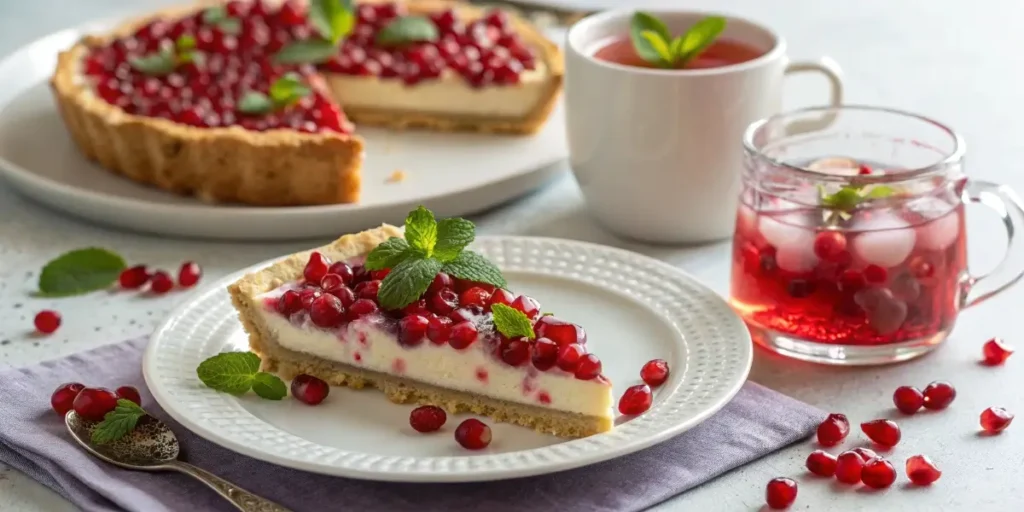
Garnishing and Presentation Ideas for a Stunning Look
Presentation turns a good dessert into a showstopper. The pomegranate cream tart already shines with its jewel-like arils, but a few extra touches can make it even more impressive. A light dusting of powdered sugar before serving adds a snowy, elegant touch. Fresh mint leaves or edible flower petals bring a pop of color that enhances visual appeal.
For a glossy finish, lightly brush the top with warm pomegranate jelly or honey glaze. This not only gives the tart a professional sheen but also helps the fruit stay fresh longer. Serve slices on white or pastel plates to make the pomegranate’s color stand out beautifully.
If you’re hosting a dinner party, individual mini tarts presented on dessert platters create a charming display. For inspiration on visual presentation, check out this middle eastern desserts guide that celebrates color, texture, and garnishing in simple yet luxurious ways.
Conclusion – Why You’ll Love This Pomegranate Cream Tart
The pomegranate cream tart is more than just a dessert — it’s a visual and flavorful masterpiece that combines freshness, creaminess, and crunch in every bite. With its radiant ruby-red pomegranate arils, silky cream filling, and buttery crust, it strikes a perfect balance between indulgence and lightness. Whether you’re making it for a family gathering, festive dinner, or casual weekend treat, it never fails to impress.
What truly makes this tart special is its versatility. You can bake it traditionally or make a no-bake version, go fully dairy or keep it plant-based, and even customize the toppings with crushed pistachios, coconut flakes, or citrus zest. Its balance of sweet and tart flavors keeps it refreshing and far from overly rich.
The best part? It’s simple enough for beginners yet sophisticated enough for celebrations. Pair it with herbal tea or a chilled mocktail, and you have a dessert that feels luxurious without being heavy. Don’t miss our delicious bagelry gluten-free bagels if you want another crowd-pleasing recipe to serve alongside tea or coffee.
FAQs
What is cream tart made of?
A cream tart typically consists of three main components — a crisp, buttery tart shell, a smooth and rich cream filling, and a topping of fruits or decorations. The cream layer can be made with whipped cream, mascarpone, or custard, depending on the desired texture. For a lighter option, Greek yogurt or coconut cream can be used instead of heavy dairy. In the pomegranate cream tart, the cream’s subtle sweetness perfectly balances the tartness of the pomegranate arils.
Are pomegranates sweet or tart?
Pomegranates are uniquely both — their flavor profile combines a refreshing sweetness with a gentle tartness. The juicy arils burst with a pleasant tang that complements creamy or buttery elements beautifully. This balance is what makes pomegranates ideal for desserts like tarts, where contrast enhances every bite.
How to make pomegranate cream at home?
Making pomegranate cream at home is simple and quick. Combine whipped heavy cream with mascarpone or cream cheese, powdered sugar, vanilla extract, and a few tablespoons of fresh pomegranate juice. Whip until smooth and fluffy. The juice not only adds flavor but also a lovely pink hue.
What are the four types of tarts?
Generally, tarts fall into four categories:
Fruit Tarts – Filled with custard or cream and topped with fresh fruit (like this pomegranate cream tart).
Custard Tarts – Made with egg-based fillings, often baked.
Savory Tarts – Contain vegetables, cheese, or meats.
No-Bake Tarts – Use crumb crusts and chilled fillings.
Each type offers endless flavor combinations, but fruit tarts remain the most popular for their freshness and color.
What is a tart, exactly?
A tart is a baked pastry dish with a firm base and shallow sides, typically filled with sweet or savory ingredients. Unlike pies, tarts are open-faced and usually made with shortcrust pastry. They can range from mini bite-sized versions to full-sized showpieces. In desserts, fruit-based tarts like the pomegranate cream tart are adored for their elegance and light texture.
What is a British tart called?
In Britain, tarts are a beloved part of traditional baking. The most famous is the Bakewell Tart, made with jam and almond filling. Other British varieties include treacle tart and custard tart — classics that highlight the country’s love for flaky pastry and creamy fillings. Though the pomegranate cream tart isn’t traditional British fare, it carries the same essence of balance and beauty found in these old-world recipes.