

Vegan Butternut Squash Soup: Creamy, Comforting, and Delicious
There’s something magical about a bowl of vegan butternut squash soup—warm, silky, and full of natural sweetness. This dish captures everything we love about cozy, plant-based comfort food. Whether you’re curling up on a chilly evening or looking for a healthy meal prep idea, this creamy soup never disappoints. Made with simple ingredients like roasted butternut squash, coconut milk, and a blend of aromatic spices, it’s proof that wholesome eating doesn’t have to be complicated.
If you’re new to vegan cooking, this recipe is a perfect start. It’s naturally gluten-free, dairy-free, and bursting with nutrients. Plus, it pairs beautifully with salads, crusty bread, or roasted vegetables. Learn more about healthy vegan side dishes that complement this recipe on gluten-free side dishes.
Table of Contents
What Makes Vegan Butternut Squash Soup So Special
Why Vegan Butternut Squash Soup Stands Out
Vegan butternut squash soup is more than just another plant-based meal—it’s a balance of texture, taste, and nutrition. The secret lies in its versatility. Butternut squash delivers natural sweetness that pairs effortlessly with earthy spices like cumin, cinnamon, or smoked paprika. When blended with coconut milk or cashew cream, it turns luxuriously creamy without any dairy. The result? A soup that feels indulgent yet nourishes your body with vitamins and antioxidants.
Unlike many other creamy soups, this vegan version skips heavy cream or butter, relying instead on wholesome fats from plants. It’s perfect for anyone following a dairy-free, gluten-free, or low-fat lifestyle. The deep orange hue is a hint of its richness in beta-carotene, an antioxidant that supports healthy vision and skin. And if you love other cozy comfort foods, check out our panera corn chowder recipe for another warming bowl idea.
Why This Soup Is a Fall and Winter Favorite
When the temperatures drop, few dishes satisfy like a hot bowl of vegan butternut squash soup. It’s a seasonal staple that brings together autumn flavors in every spoonful. Roasting the squash first enhances its sweetness, while garlic and onions build depth. The gentle spices—nutmeg, ginger, or a touch of cinnamon—create that warm, inviting aroma that fills your kitchen.
Not only is it easy to prepare, but it’s also ideal for meal prep. You can make a large batch, refrigerate it for the week, or freeze portions for later. For more comforting ideas, discover our goya split pea soup recipe—another plant-based classic that warms from the inside out.
Health Benefits of Vegan Butternut Squash Soup
Nutritional Powerhouse: Vitamins, Fiber, and Antioxidants
Vegan butternut squash soup isn’t just comfort in a bowl—it’s nutrition made delicious. Butternut squash itself is a nutrient-dense vegetable packed with vitamin A, vitamin C, and fiber, which support immunity, digestion, and glowing skin. Every spoonful delivers a smooth dose of wellness without any processed ingredients.
A single cup of butternut squash offers over 450% of your daily vitamin A needs, mostly in the form of beta-carotene—an antioxidant your body converts into vitamin A. This powerful nutrient protects cells from damage and supports eye and skin health. It’s one of the main reasons this soup is often recommended for people looking to boost immunity naturally during the cold season.
The addition of other plant-based ingredients like onions, garlic, carrots, and coconut milk contributes to its impressive nutritional profile. These ingredients provide prebiotics, healthy fats, and micronutrients that promote heart health. Because it’s vegan, it contains no cholesterol and minimal saturated fats—making it ideal for people managing cholesterol levels or following a whole-food, plant-based lifestyle.
For more wholesome ideas to complement your soup, check out our vegan breakfast burrito recipe—a great plant-based start to your day that shares similar heart-healthy benefits.
Here’s a quick nutritional snapshot of a typical serving of vegan butternut squash soup:
| Nutrient | Approx. Amount (per cup) | Health Benefit |
|---|---|---|
| Calories | 120 | Low-calorie comfort food |
| Fiber | 4g | Aids digestion & fullness |
| Vitamin A | 450% DV | Supports vision & immunity |
| Vitamin C | 35% DV | Strengthens immune system |
| Potassium | 15% DV | Balances fluids & supports heart health |
| Healthy Fats | 6g | From coconut milk or olive oil |
Why Butternut Squash Is Great for Plant-Based Diets
One of the best things about butternut squash is how seamlessly it fits into vegan and vegetarian diets. Its mild, naturally sweet flavor pairs well with a wide variety of herbs and spices, making it an adaptable base for countless dishes. Whether you’re making a savory soup, roasting it for salads, or blending it into creamy sauces, it adds both nutrition and depth of flavor.
Butternut squash is also a fantastic carb alternative. Its complex carbohydrates release energy slowly, helping you feel full longer while keeping blood sugar stable. The soup version, especially when paired with protein-rich sides like lentil salad or quinoa, makes a balanced, filling meal.
Additionally, this vegetable’s smooth texture when blended means you don’t need dairy or butter to achieve creaminess. Instead, you can rely on plant-based fats like coconut milk, cashew cream, or olive oil. That’s a win for vegans and anyone seeking a lighter, more heart-friendly dish.
For another delicious plant-based comfort meal, don’t miss our vegan st. patrick’s day recipes—they feature seasonal, wholesome dishes with similar warming vibes.
Essential Ingredients for the Perfect Vegan Butternut Squash Soup
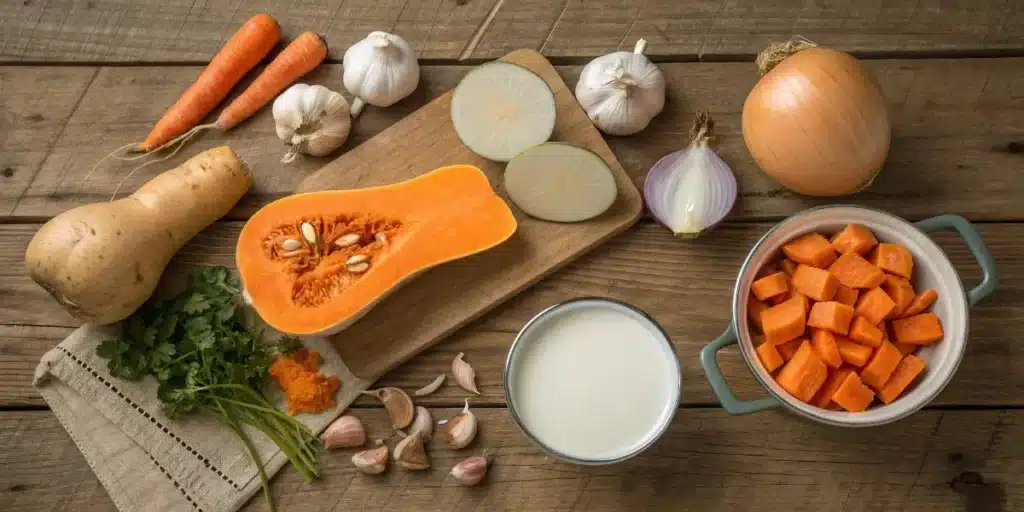
Must-Have Ingredients for a Creamy Texture Without Dairy
The beauty of vegan butternut squash soup lies in its simplicity. You don’t need fancy ingredients—just a few key components that work together to create that silky-smooth, naturally sweet, and perfectly spiced bowl of comfort.
Here are the must-haves for achieving that classic, creamy texture without dairy:
| Ingredient | Role in the Recipe | Notes |
|---|---|---|
| Butternut Squash | The star ingredient | Choose one that feels heavy for its size with deep orange flesh for maximum sweetness. |
| Coconut Milk or Cashew Cream | Adds richness and body | Coconut milk gives a mild tropical flavor; cashew cream offers neutral creaminess. |
| Onions & Garlic | Build savory depth | Sauté gently to bring out their natural sweetness before adding to the soup. |
| Vegetable Broth | Creates a smooth base | If you’re out of broth, you can use water and adjust the seasoning. |
| Olive Oil or Avocado Oil | Helps caramelize the squash | Roast with a drizzle of oil for deeper, nuttier flavor. |
| Spices (Cinnamon, Nutmeg, Cumin, or Ginger) | Adds warmth and complexity | A pinch goes a long way—balance sweet and savory notes. |
| Salt & Pepper | Enhances all other flavors | Use sea salt or Himalayan salt for the best mineral balance. |
These pantry staples form the backbone of your soup. If you want to bring out the natural sweetness even more, try roasting the squash before blending—it deepens the flavor and adds a hint of smokiness.
Don’t miss our spaghetti squash seeds guide to learn how to use every part of your squash and reduce food waste while boosting nutrition.
Flavor Boosters: Spices and Herbs That Enhance the Soup
When it comes to butternut squash soup flavor, spices make all the difference. The key is to balance the natural sweetness of the squash with warming, earthy, and slightly spicy notes. Here are some of the best vegan-friendly seasonings to elevate your soup:
- Cinnamon and Nutmeg: Add cozy fall warmth—just a pinch enhances sweetness without overpowering it.
- Cumin or Smoked Paprika: Bring in earthy depth that complements the creaminess.
- Fresh Ginger or Turmeric: Boosts both flavor and anti-inflammatory benefits.
- Thyme or Sage: Adds herby freshness for balance.
- Coconut Aminos or Soy-Free Tamari: A dash deepens umami flavor without using animal products.
To take your soup from “good” to “wow,” finish each bowl with a swirl of coconut cream, a sprinkle of roasted pumpkin seeds, and a drizzle of olive oil. For a vibrant touch, garnish with finely chopped herbs or microgreens.
If you love exploring new vegan flavors, check out our creamy vegan hollandaise sauce—it’s another plant-based favorite that adds richness to roasted veggies or grain bowls.
Step-by-Step Recipe Guide
How to Roast and Prepare Butternut Squash for Soup
A truly flavorful vegan butternut squash soup starts with perfectly roasted squash. Roasting draws out its natural sugars, softens the texture, and gives your soup a caramelized, savory-sweet base. Here’s how to do it right:
Step 1: Preheat the oven
Set your oven to 400°F (200°C) and line a baking sheet with parchment paper for easy cleanup.
Step 2: Prep the squash
Cut the butternut squash in half lengthwise and scoop out the seeds. (Tip: Save those seeds to roast later—see our spaghetti squash seeds guide for ideas.) Brush each half lightly with olive oil and season with salt and pepper.
Step 3: Roast until tender
Place the squash halves cut-side down and roast for 40–45 minutes, or until the flesh is fork-tender. You’ll know it’s ready when the edges are slightly golden.
Step 4: Scoop and cool
Let it cool for 10 minutes before scooping the soft flesh into a bowl. Roasting adds an incredible nutty aroma that makes your soup taste homemade and luxurious.
If you prefer a deeper flavor, toss in garlic cloves or onion wedges to roast alongside the squash—they’ll blend beautifully later. For more cozy inspiration, check out our roasted butternut squash recipe.

Blending, Seasoning, and Adjusting the Texture
Now comes the magic—turning your roasted squash into a smooth, velvety soup. Follow these simple steps:
Step 1: Sauté aromatics
In a large pot, heat a tablespoon of olive oil over medium heat. Add chopped onions and garlic, sautéing until soft and translucent. For extra warmth, stir in a pinch of ginger or cumin.
Step 2: Add your roasted squash and liquids
Transfer the roasted butternut squash into the pot. Pour in vegetable broth (or water if you’re keeping it light). Start with about 3 cups and adjust later depending on your desired thickness.
Step 3: Blend until smooth
Using an immersion blender, puree the mixture until completely smooth. If you’re using a regular blender, let the mixture cool slightly before blending in batches.
Step 4: Add coconut milk and seasonings
Return the blended soup to the pot and stir in 1 cup of coconut milk for creaminess. Season with salt, pepper, nutmeg, and cinnamon to taste. If it feels too thick, add a splash of broth to loosen it up.
Step 5: Simmer and serve
Simmer gently for 10–15 minutes to let the flavors meld. Taste and adjust seasonings as needed. Serve warm with toasted bread, a drizzle of olive oil, and a sprinkle of fresh herbs.
To elevate your bowl, try pairing it with a side from our gluten-free side dishes collection—perfect for a balanced, comforting vegan meal.
Tips to Make Butternut Squash Soup More Flavorful
What to Add to Butternut Squash Soup for More Flavor (Vegetarian)
If your vegan butternut squash soup feels a little too mild, don’t worry—there are plenty of simple ways to build depth and excitement without compromising its wholesome nature. Flavor in soup comes down to layers, so the key is to balance sweet, savory, creamy, and earthy notes.
Here are a few vegetarian-friendly flavor enhancers that make a big difference:
- Roasted Aromatics: Try roasting onions, garlic, or even carrots alongside your squash for caramelized sweetness that adds complexity.
- Acidic Ingredients: A splash of apple cider vinegar, fresh lemon juice, or a dollop of vegan yogurt brightens the overall taste.
- Umami Boosters: Add a teaspoon of miso paste or coconut aminos to deepen the savory tone.
- Spices and Herbs: Warming spices like ginger, turmeric, smoked paprika, and thyme enhance the earthiness of squash beautifully.
- Fresh Toppings: Garnish each bowl with a drizzle of chili oil, pumpkin seeds, or a handful of microgreens for texture and freshness.
If you enjoy experimenting with global flavors, blend in a spoonful of curry paste or Thai-inspired seasoning for an aromatic twist. Learn more about spice combinations in our steak seasoning recipe—it’s surprisingly versatile for vegetables, too.
Common Mistakes to Avoid When Making Vegan Soups
Even a great recipe can fall flat if a few key techniques are overlooked. Avoid these common pitfalls to ensure your vegan butternut squash soup comes out delicious every time:
- Skipping the roasting step: Boiled squash is fine, but roasting develops a deeper, sweeter flavor that makes your soup unforgettable.
- Under-seasoning: Butternut squash is mild. Taste as you go and adjust salt, pepper, and spices after blending.
- Adding all liquid at once: Start with less broth and add more gradually until you reach your ideal consistency.
- Blending too soon: Allowing the soup to simmer first helps flavors meld together.
- Forgetting the garnish: A swirl of coconut cream or a sprinkle of seeds adds visual appeal and texture contrast.
Another trick? Always blend in a few sautéed carrots or parsnips—they enhance natural sweetness and round out the soup’s flavor.
To explore other hearty, flavor-rich ideas, try our panera corn chowder recipe. It’s a similar creamy comfort soup that balances vegetables and spices beautifully.
Creative Pairings and Serving Ideas
What Goes Well with Butternut Squash Soup
The beauty of vegan butternut squash soup is its versatility—it pairs wonderfully with a variety of sides, from crunchy salads to hearty breads. Whether you’re serving it as a main course or a starter, the right pairing can take this dish from simple to stunning.
Here are some of the best pairings to complement your soup:
- Crusty Artisan Bread or Garlic Toast – Perfect for dipping. The crisp exterior contrasts beautifully with the soup’s creamy texture.
- Green Salads – A light, zesty salad like arugula with lemon vinaigrette cuts through the richness of the soup. For a balanced vegan combo, check out our greek side dishes.
- Grilled Vegetables – Roasted carrots, bell peppers, or asparagus add a smoky, earthy touch that enhances the soup’s sweetness.
- Vegan Sandwiches or Wraps – Pair it with a hummus wrap, avocado toast, or roasted veggie sandwich for a satisfying meal.
- Grain Bowls – Add texture and heartiness with quinoa, brown rice, or farro. Learn more about balanced vegan options in our plant-based power bowls.
If you’re serving this at a dinner party, consider a drizzle of olive oil and a sprinkle of microgreens for presentation. These small touches make a big impression and highlight the soup’s golden hue.
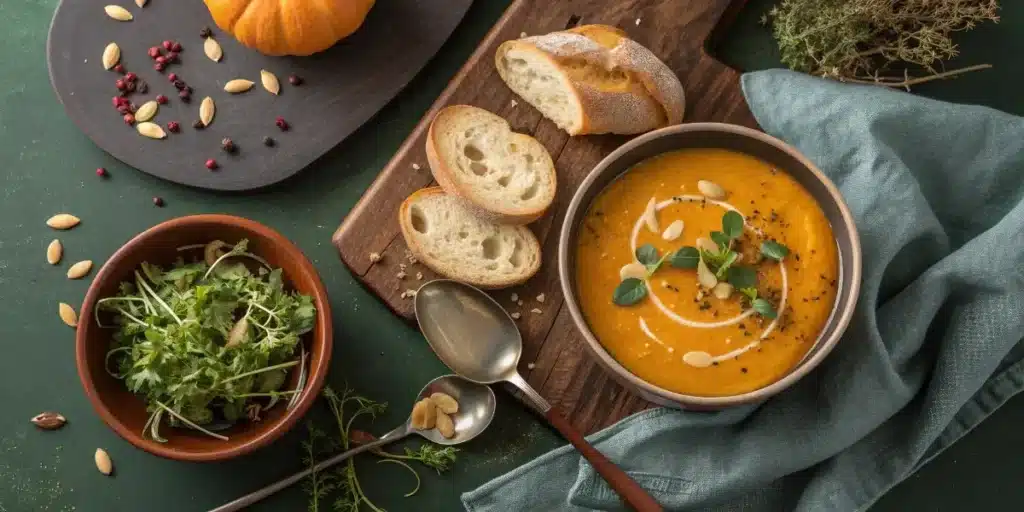
Perfect Vegan Sides and Toppings for a Complete Meal
Adding thoughtful sides and toppings turns your vegan butternut squash soup into a satisfying, well-rounded meal. Here are some combinations that make your bowl even more exciting:
Toppings:
- Toasted Pumpkin Seeds: Add crunch and a nutty flavor.
- Coconut Cream Swirl: Creates a creamy finish and elevates presentation.
- Croutons: Homemade garlic croutons add texture and soak up every drop of soup.
- Herbs: Fresh parsley, thyme, or chives for a pop of color and freshness.
Sides:
- Grain Salad: Try a light Mediterranean quinoa salad or tabbouleh to balance the richness.
- Roasted Potatoes: Crisp on the outside, tender inside—they pair beautifully with creamy soups.
- Vegan Flatbread: Warm and chewy, perfect for dipping.
- Sauteed Greens: Kale or spinach lightly sautéed in olive oil and garlic provides a nutritious balance.
For extra flavor pairing, try our cabbage kielbasa soup recipe for a hearty vegetable inspiration (swap the kielbasa for vegan sausage if needed).
Variations and Customizations
Spiced, Coconut, and Savory Versions of Vegan Butternut Squash Soup
One of the best things about vegan butternut squash soup is how flexible it is. With just a few tweaks, you can completely transform the flavor and mood of the dish—whether you want something spicy, tropical, or deeply savory. Let’s explore a few of the most-loved variations.
1. Spiced Butternut Squash Soup
For a cozy, warming version, blend in a teaspoon of ground cumin, coriander, and a pinch of smoked paprika. Add a dash of cayenne pepper or chili flakes if you like heat. This version pairs perfectly with fall evenings and crusty bread.
2. Coconut Curry Butternut Squash Soup
Give your soup a Thai-inspired twist by stirring in red curry paste, coconut milk, and a squeeze of lime juice. The coconut milk adds richness, while the curry infuses complex, aromatic flavors. Top it with fresh cilantro for a burst of freshness.
3. Savory Herbed Butternut Squash Soup
For a more robust, dinner-style soup, skip the cinnamon and nutmeg and go for thyme, sage, and garlic. Roast your squash with a drizzle of olive oil and herbs before blending for an earthy, comforting result.
If you love rich, plant-based sauces and want to complement your soup, check out our creamy vegan hollandaise sauce—it’s another example of how coconut milk can create velvety textures without any dairy.
Can You Make Butternut Squash Soup Without Vegetable Broth?
Absolutely—you can make vegan butternut squash soup without vegetable broth, and it’ll still be rich and flavorful. Here’s how to maintain depth when you don’t have broth on hand:
- Use Water with Seasonings: Add plain water, but boost flavor with extra aromatics like garlic, onions, and herbs. Include bay leaves, thyme, or a splash of soy-free tamari to mimic that savory broth taste.
- Add Roasted Vegetables: Roasting intensifies sweetness and builds natural umami, reducing the need for pre-made broth.
- Use Coconut Milk or Almond Milk: These add body and creaminess, helping you achieve a smooth texture without compromising flavor.
- Add Nutritional Yeast: It brings in that subtle, cheesy, umami note that makes soups satisfying.
If you want to create a homemade broth alternative, our mirepoix broth concentrate is a fantastic kitchen hack. It’s a concentrated base made from slow-cooked veggies that adds depth and flavor to any vegan dish.
Storage, Freezing, and Reheating Tips
How to Store Leftover Vegan Butternut Squash Soup Safely
Storing your vegan butternut squash soup properly helps preserve its creamy texture and rich flavor. Whether you’ve made a big batch for meal prep or saved leftovers from dinner, follow these simple storage guidelines to keep it fresh and delicious.
1. Cool Before Storing:
Allow the soup to cool completely at room temperature before transferring it to airtight containers. Storing hot soup immediately can create condensation, making it watery.
2. Use the Right Containers:
Opt for glass or BPA-free plastic containers with tight-fitting lids. Divide large portions into smaller containers for easy reheating.
3. Refrigeration:
Vegan butternut squash soup keeps well in the fridge for up to 4–5 days. For best results, store it on the middle shelf—where temperature is most stable—and avoid leaving it uncovered.
4. Reheating:
When reheating, pour the soup into a saucepan over medium heat. Stir occasionally to prevent sticking, and add a splash of water or coconut milk if it thickens too much. Avoid boiling—it can dull the flavors.
5. Refresh the Flavor:
After reheating, brighten the soup with a squeeze of lemon juice or a pinch of salt to wake up the flavors again.
To complement your reheated soup, pair it with our gluten-free biscuit recipe—it’s light, fluffy, and perfect for dipping.
Best Practices for Freezing and Reheating Without Losing Flavor
Freezing vegan butternut squash soup is a fantastic way to enjoy this cozy dish all season long. Here’s how to keep it smooth and flavorful after thawing:
1. Portion Before Freezing:
Divide the soup into individual servings before freezing. This makes it easier to thaw only what you need.
2. Leave Space in Containers:
The soup expands as it freezes, so leave about an inch of space at the top of each container.
3. Label and Date:
Always label your containers with the freezing date. Properly stored, it will maintain its best quality for up to 3 months.
4. Thaw Safely:
Move the frozen soup to the fridge overnight for gentle thawing. Avoid microwaving directly from frozen—it can cause uneven heating and ruin the creamy texture.
5. Restore the Creaminess:
When reheating, stir in a splash of coconut milk, almond milk, or a drizzle of olive oil to bring back its velvety consistency.
To make your vegan meals even more effortless, check out our slow cooker pesto chicken alfredo ravioli lasagna—while not vegan, it’s a great meal-prep concept that can be adapted using plant-based substitutes.
Conclusion: A Warm, Wholesome, and Flavorful Vegan Delight
A bowl of vegan butternut squash soup is proof that simple ingredients can deliver extraordinary comfort. From its naturally sweet roasted squash base to its silky coconut cream finish, every spoonful feels like a cozy hug. Whether you’re enjoying it solo with crusty bread or pairing it with a bright salad, this soup fits perfectly into any plant-based meal plan.
It’s not just about flavor—it’s about nourishment. Packed with vitamins, antioxidants, and fiber, this soup supports a healthy lifestyle while satisfying your craving for something hearty and delicious.
So, the next time you’re in the mood for a warm, creamy, and nourishing bowl, whip up this easy recipe. You’ll taste why vegan butternut squash soup has become a staple in kitchens across the country.
For more plant-based comfort recipes, don’t miss our vegan breakfast burrito recipe or explore cozy, veggie-forward options like delicious acorn squash recipes.
FAQs
What to add to butternut squash soup for more flavor vegetarian?
To enhance the flavor of vegan butternut squash soup, try roasting the squash, onions, and garlic before blending. This adds natural caramelization and depth. You can also stir in spices like cumin, smoked paprika, or turmeric, and balance the sweetness with a splash of lemon juice or apple cider vinegar. For extra richness, swirl in a spoonful of coconut milk or cashew cream before serving.
What goes well with butternut squash in a soup?
Butternut squash pairs beautifully with carrots, apples, leeks, and sweet potatoes. Herbs like thyme, sage, and rosemary add warmth, while ginger or garlic boost its savory side. For creaminess, combine it with coconut milk or almond milk, and finish with roasted pumpkin seeds or fresh herbs for texture and color.
Can you make butternut squash soup without vegetable broth?
Yes, you can make butternut squash soup without vegetable broth. Simply use water and boost the flavor by sautéing onions, garlic, and herbs at the start. Adding roasted vegetables, nutritional yeast, or a splash of soy-free tamari helps create that savory depth you’d normally get from broth. Finish with a swirl of coconut milk for creaminess.
How do I make my butternut squash soup taste better?
To make your vegan butternut squash soup taste better, layer your flavors. Roast the squash first, use fresh herbs, and season generously with salt, pepper, and a pinch of nutmeg or cinnamon. A squeeze of lemon or apple cider vinegar brightens the flavor, while a drizzle of olive oil or coconut cream before serving adds richness and balance.
What pairs well with butternut squash?
Butternut squash pairs perfectly with crusty bread, green salads, roasted vegetables, and quinoa bowls. For a balanced vegan meal, serve it with a Mediterranean quinoa salad or a garlic-infused flatbread. Its subtle sweetness also goes well with savory sides like sautéed kale or roasted chickpeas for extra protein and texture.
Do you put nutmeg or cinnamon in butternut squash soup?
Yes—both nutmeg and cinnamon work beautifully in vegan butternut squash soup. A small pinch of each enhances the soup’s natural sweetness and adds cozy warmth. For a savory twist, use nutmeg alone and balance it with thyme or sage instead of cinnamon to create a deeper, more earthy flavor profile.