
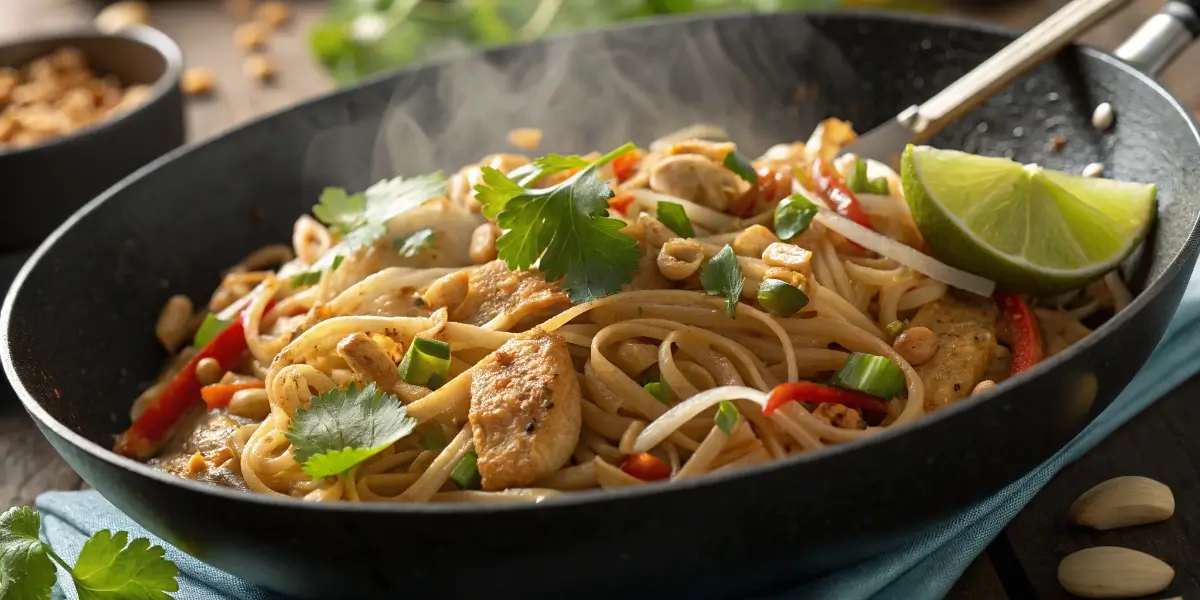
Pad Thai Recipe: Authentic, Easy, and Delicious Thai Noodles
Pad Thai is more than just Thailand’s most beloved noodle dish—it’s a perfect balance of sweet, sour, salty, and umami in every bite. This Pad Thai recipe walks you through how to create that restaurant-quality flavor right at home without alcohol or pork. Whether you prefer chicken, shrimp, or a vegetarian version, you’ll learn the essential ingredients, secret tips, and authentic sauce combinations that make this dish so irresistible.
Looking for inspiration? Try Bang Bang Shrimp Recipe to add another Asian favorite to your list.
Table of Contents
What is Pad Thai?
The Origins of Pad Thai and Its Cultural Significance
Pad Thai, also known as “Phad Thai,” originated in the 1930s when Thailand’s government promoted rice noodle dishes to boost national identity and reduce rice consumption. Over time, it became a signature street food known for its vibrant flavors and quick preparation. Authentic Pad Thai is stir-fried in a wok using rice noodles, eggs, tofu, and a tamarind-based sauce that blends salty fish sauce, palm sugar, and lime juice. It’s then topped with peanuts, bean sprouts, and lime wedges—each ingredient adding texture and freshness.
What makes Pad Thai so appealing worldwide is how it perfectly captures Thailand’s culinary philosophy: balance in every bite. Sweetness from palm sugar, saltiness from fish sauce, tanginess from tamarind, and the crunch of crushed peanuts come together to create a harmony that feels both comforting and exciting.
Discover great ideas like Delicious Hibachi Chicken for another flavorful Asian-inspired dish.
Why Pad Thai Became Thailand’s National Dish
Pad Thai became Thailand’s unofficial national dish during World War II when the government encouraged citizens to cook more noodles as part of a campaign to promote unity and resourcefulness. The dish’s simplicity—made with local ingredients—made it popular across all classes. Street vendors began selling Pad Thai everywhere, and it soon became a staple for both locals and tourists.
Today, Pad Thai is not only a comfort food but also a cultural ambassador of Thai cuisine. Each region and even each street stall might have its twist—some add shrimp, others tofu or chicken—but the essence remains the same: a perfect balance of flavor, texture, and aroma.
Don’t miss our Authentic Spanish Rice if you love international flavors made easy at home.
Essential Pad Thai Ingredients
Fresh Ingredients for Authentic Pad Thai Flavor
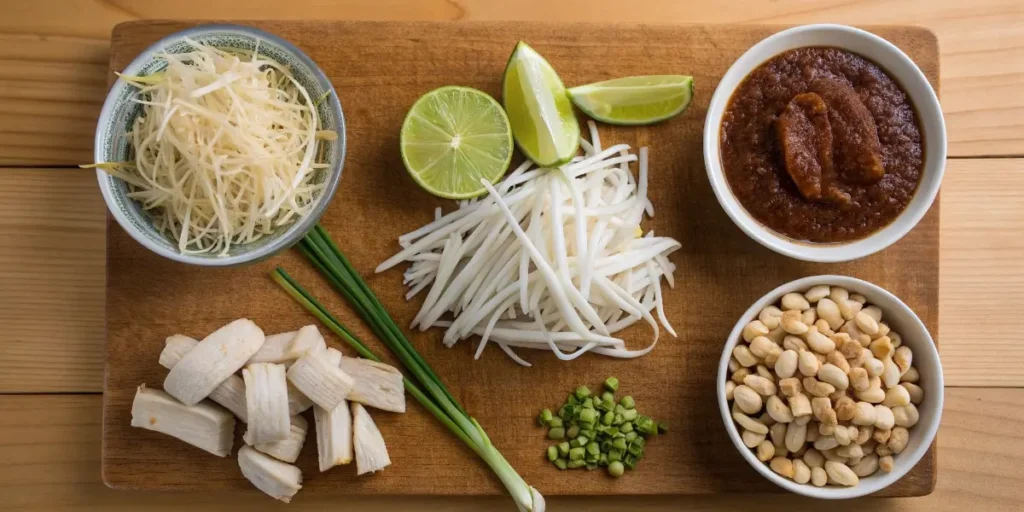
To make an authentic chicken Pad Thai recipe, start with fresh, quality ingredients. The beauty of this dish lies in its balance—no single flavor dominates. Each element complements the others perfectly. Here’s what you’ll need:
| Category | Ingredients | Notes |
|---|---|---|
| Noodles | Flat rice noodles | Medium-width works best for even stir-frying. |
| Protein | Chicken breast or thighs | Slice thinly for quick cooking. |
| Vegetables | Bean sprouts, garlic chives, grated carrots | Adds crunch and freshness. |
| Sauce | Tamarind paste, fish sauce, palm sugar | The soul of authentic Pad Thai flavor. |
| Toppings | Crushed peanuts, lime wedges, cilantro | Enhance taste and texture. |
You’ll also need neutral oil (like peanut or canola oil) and an egg or two for richness. Authentic Pad Thai sauce has three signature notes: tangy, salty, and sweet — all of which must be balanced carefully to get that Thai restaurant magic.
Learn more about pairing this dish with flavorful sauces in our Homemade Cajun Alfredo Sauce.
Vegetarian and Chicken Pad Thai Ingredient Variations
While chicken Pad Thai is the most popular version, it’s easy to adapt. For a vegetarian Pad Thai, skip the chicken and fish sauce. Instead, use tofu and soy sauce or tamari for that savory kick. You can also add extra vegetables like bell peppers, broccoli, or mushrooms.
Here’s a quick breakdown of alternatives:
| Ingredient | Chicken Pad Thai | Vegetarian Pad Thai |
|---|---|---|
| Protein | Chicken breast/thigh | Firm tofu or tempeh |
| Sauce base | Fish sauce + tamarind | Soy sauce + tamarind |
| Garnish | Peanuts + lime | Peanuts + lime |
| Add-ons | Egg (optional) | Extra veggies |
These ingredient swaps maintain the authentic balance of sweet, sour, and savory while fitting different dietary needs. Discover another protein-packed option in our Healthy Shredded Chicken recipe for meal prep inspiration.
The Secret Ingredient in Pad Thai
Understanding the Role of Tamarind in Pad Thai Sauce
If there’s one thing that separates authentic Pad Thai from just another noodle stir-fry, it’s the tamarind. This tangy, slightly fruity ingredient gives the dish its signature sour depth and balances the sweetness of palm sugar and the saltiness of fish sauce. Traditional Thai street vendors wouldn’t dream of skipping it—it’s what brings all the flavors together.
Tamarind paste is made from the pulp of tamarind pods soaked in water, then strained into a thick, dark brown concentrate. Its natural acidity cuts through the richness of the noodles and chicken, creating that addictive flavor that keeps you coming back for more. If you’re after true authenticity, tamarind is the secret ingredient you can’t skip.
When using tamarind paste, moderation is key. Start with one tablespoon, taste your sauce, and adjust. Too much can overpower the dish, while too little leaves it flat. If you’re new to cooking Thai food, think of tamarind as the “lime juice of Asia”—essential for balance and brightness.
Alternatives if You Don’t Have Tamarind
Can’t find tamarind in your local grocery store? No problem. While nothing replicates its flavor perfectly, there are several substitutes that come surprisingly close.
Here are a few quick alternatives you can use to make Pad Thai without tamarind:
| Substitute | Ratio (per 1 tbsp tamarind) | Flavor Profile |
|---|---|---|
| Lime juice + brown sugar | 1 tbsp lime + 1 tsp sugar | Bright, tangy, slightly sweet |
| Rice vinegar + molasses | 1 tbsp vinegar + ½ tsp molasses | Mild acidity with subtle caramel notes |
| Worcestershire sauce + lime juice | 1 tsp each | Deep umami with tangy kick |
Among these, lime juice and brown sugar is the most accessible combo and keeps your Pad Thai bright and flavorful. The goal is to maintain balance—sweet, salty, tangy, and just a hint of umami.
Discover more about adding sweet-sour balance in our Cilantro Lime Rice in a Rice Cooker recipe.
How to Make Pad Thai Sauce
The Three Key Ingredients for Pad Thai Sauce
A great Pad Thai recipe begins and ends with its sauce. The noodles, vegetables, and chicken are all vehicles for that perfect blend of flavors—sweet, salty, tangy, and just a hint of spice. Authentic Pad Thai sauce is traditionally made from three core ingredients:
- Tamarind Paste – Adds tangy depth and the signature Pad Thai sourness.
- Fish Sauce – Contributes a salty, savory umami flavor.
- Palm Sugar – Balances everything with subtle sweetness and richness.
If you can’t find palm sugar, light brown sugar is a fine substitute. The key is achieving harmony—no single flavor should dominate. Below is a classic sauce recipe used by Thai street vendors that you can easily recreate at home:
| Ingredient | Measurement | Purpose |
|---|---|---|
| Tamarind paste | 2 tbsp | Adds tang and authenticity |
| Fish sauce | 3 tbsp | Deep savory flavor |
| Palm sugar (or brown sugar) | 2 tbsp | Balances salt and sour |
| Rice vinegar | 1 tbsp | Enhances acidity |
| Lime juice | 1 tbsp | Adds freshness |
| Chili flakes (optional) | ½ tsp | For gentle heat |
Instructions:
- In a small saucepan, combine tamarind paste, fish sauce, and palm sugar.
- Warm gently over low heat until the sugar dissolves.
- Stir in vinegar, lime juice, and chili flakes.
- Taste and adjust to your liking—add sugar for sweetness, tamarind for tang, or fish sauce for salt.
Pro tip: The sauce should taste bold on its own—it will mellow once mixed with noodles, eggs, and chicken.
Balancing Sweet, Sour, and Salty Flavors Like a Thai Chef
The soul of Pad Thai lies in its balance. Authentic Thai cooks follow a simple principle: if it’s too sweet, add acid; if it’s too sour, add sugar; if it’s too salty, add water or lime juice.
Here’s a quick flavor-adjustment guide for perfecting your Pad Thai sauce:
| Taste Issue | Adjustment Tip |
|---|---|
| Too salty | Add a splash of lime juice or a teaspoon of sugar |
| Too sweet | Mix in a touch more tamarind or vinegar |
| Too sour | Stir in ½ tsp sugar or 1 tsp fish sauce |
| Too bland | Add an extra dash of fish sauce or chili flakes |
These micro-adjustments can transform a good dish into a restaurant-quality Pad Thai right from your kitchen.
Don’t miss our Delicious Ground Beef Crock Pot for more slow-cooked meals that balance rich and tangy flavors beautifully.
Step-by-Step Pad Thai Recipe
Preparing the Noodles, Sauce, and Protein
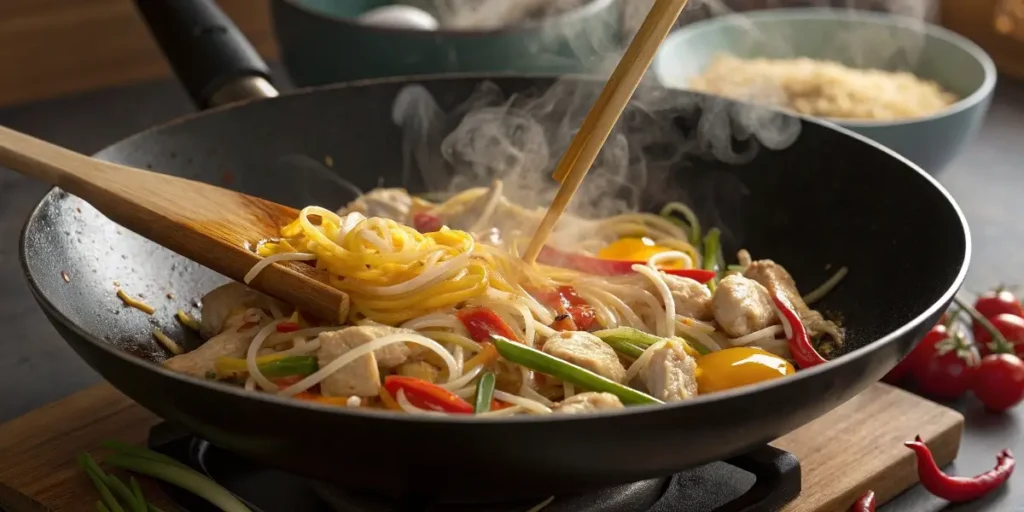
Now that you’ve mastered the sauce, it’s time to bring everything together in your wok. The secret to a successful chicken Pad Thai recipe lies in the prep. Since everything cooks fast, have all ingredients ready before turning on the heat.
Ingredients (serves 2–3):
- 6 oz flat rice noodles (medium width)
- 1 tbsp oil (peanut or canola)
- 1 chicken breast, thinly sliced
- 2 cloves garlic, minced
- 2 eggs (lightly beaten)
- 1 cup bean sprouts
- 1/4 cup crushed peanuts
- 2 green onions, chopped
- 1 lime (cut into wedges)
- Pad Thai sauce (from Part 4)
Step 1: Soak the noodles
Place rice noodles in warm water for about 25–30 minutes, or until just pliable. Drain and set aside. Don’t boil them — they’ll finish cooking in the wok later.
Step 2: Prepare the sauce
Warm your pre-made Pad Thai sauce in a small pan or microwave until it slightly thickens. Keep it nearby.
Step 3: Cook the chicken
Heat oil in a wok or large skillet over medium-high heat. Add sliced chicken and cook for 3–4 minutes until browned and cooked through. Remove and set aside.
Step 4: Scramble the eggs
In the same wok, add a bit more oil if needed. Pour in the beaten eggs and scramble quickly until just set.
Step 5: Combine everything
Add the softened noodles and sauce into the wok. Toss with tongs until the noodles absorb the sauce. Add back the chicken, and toss again for 2–3 minutes.
Step 6: Finish with toppings
Remove from heat. Stir in bean sprouts and green onions. Plate and top with crushed peanuts and a squeeze of fresh lime.
Your kitchen will smell like a Thai street market in minutes — the combination of tamarind, garlic, and sizzling noodles is absolutely irresistible.
Learn more about creating Asian noodle perfection with our Elote Pasta Salad Recipe.
Cooking Pad Thai in the Right Order
Timing matters in Pad Thai. Since everything cooks fast, the order ensures the noodles don’t stick or turn soggy.
Here’s the ideal cooking sequence:
- Protein first – sear your chicken to develop flavor.
- Aromatics second – add garlic right after removing chicken to prevent burning.
- Eggs next – cook them separately to avoid clumping.
- Noodles and sauce last – toss together for just enough time to coat evenly.
Pro Tip: Keep your wok over medium-high heat, and don’t overcrowd it. A hot pan means smoky, restaurant-style flavor.
Looking for another easy Asian meal? Check out our Bang Bang Salmon Bites — crispy, spicy, and ready in minutes.
Expert Tips for Perfect Pad Thai Every Time
Secrets to Achieving the Perfect Texture and Flavor
Getting that restaurant-quality Pad Thai recipe flavor at home is all about precision — not in fancy techniques, but in timing, temperature, and taste balance. Here’s how to make your Pad Thai sing every single time:
1. Use the Right Noodles
Flat rice noodles are non-negotiable. Medium-width noodles absorb sauce beautifully and hold up to stir-frying without breaking apart. Don’t boil them — just soak until pliable.
2. Work in Batches
Crowding your wok leads to soggy noodles. If you’re doubling the recipe, cook it in two batches. This ensures the noodles fry instead of steam.
3. Keep the Wok Hot
Thai cooking is fast. Preheat your wok until it’s lightly smoking before adding oil. This locks in that signature smoky, slightly caramelized flavor.
4. Balance Before Serving
Taste your noodles before plating. Adjust for balance: add sugar for sweetness, tamarind for sourness, or lime juice for freshness.
5. Use Crushed Peanuts and Fresh Lime
Texture is half the joy of Pad Thai. The peanuts add crunch, and lime brings brightness — never skip them.
For more flavorful cooking inspiration, don’t miss our Garlic Parmesan Chicken Pasta — another dish where balance and timing matter just as much.
Common Mistakes to Avoid When Making Pad Thai
Even seasoned cooks make small errors that can ruin texture or flavor. Here’s a quick comparison to help you avoid them:
| Mistake | What Happens | Expert Fix |
|---|---|---|
| Over-soaking noodles | They turn mushy and clump | Soak only until flexible, not soft |
| Cooking sauce too long | Flavors turn bitter | Heat just until sugar dissolves |
| Adding sauce too early | Noodles absorb unevenly | Toss sauce last for even coating |
| Using too much protein | Sauce gets diluted | Keep ratio balanced: 1 part protein to 2 parts noodles |
| Skipping garnishes | Dish tastes flat | Always finish with lime, sprouts, and peanuts |
Remember: Pad Thai is meant to be quick and vibrant — not heavy or greasy. Keep your wok moving and your ingredients light.
Looking for another light yet flavorful meal? Try our Healthy Shredded Chicken again as a base for Thai-inspired wraps.
Healthy Pad Thai Options
How to Make Gluten-Free or Low-Sodium Pad Thai
A traditional Pad Thai recipe is already naturally gluten-free when made with rice noodles, but some hidden ingredients—like soy sauce or certain brands of fish sauce—can contain gluten or excess sodium. Here’s how to make this dish light, clean, and better for you without losing its authentic taste.
For a Gluten-Free Pad Thai:
- Use certified gluten-free rice noodles. Most rice noodles are safe, but double-check the label for cross-contamination.
- Replace soy sauce with tamari or coconut aminos. These options deliver the same umami punch minus the gluten.
- Watch your toppings. Stick with natural ingredients like crushed peanuts, lime, and bean sprouts.
For a Low-Sodium Version:
- Dilute your fish sauce with a tablespoon of water or lime juice to maintain flavor while reducing salt.
- Skip added salt. The sauce already provides plenty of seasoning.
- Add more herbs and fresh veggies. Cilantro, green onions, and shredded carrots boost taste and texture naturally.
A low-sodium Pad Thai can still pack big flavor with smart ingredient swaps. Discover more nourishing dishes like our Greek Lemon Rice Soup Recipe for a fresh, tangy twist that’s gentle on salt.
Light Pad Thai Variations Without Sacrificing Flavor
Healthy doesn’t mean boring. With a few clever tweaks, you can enjoy a lighter Pad Thai that still bursts with authentic Thai character.
1. Swap the Oil:
Instead of heavy peanut oil, use avocado or light sesame oil. These provide healthy fats and a mild nutty flavor.
2. Add More Veggies:
Bulk up your dish with colorful vegetables — red bell peppers, snap peas, or zucchini ribbons. They make each serving more satisfying while cutting calories.
3. Go Half-Noodle, Half-Veggie:
Replace half the noodles with spiralized carrots or zucchini. You’ll still get that comforting noodle texture with fewer carbs.
4. Try a Tofu or Shrimp Base:
Both are lighter protein options that absorb sauce beautifully while keeping the dish fresh and quick to cook.
5. Use Less Sugar:
Palm sugar gives great flavor, but you can reduce it by half or replace it with coconut sugar for a more natural sweetness.
Looking for a nutritious side to pair with your healthy Pad Thai? Check out our Vegan Yum Yum Sauce Recipe—it’s creamy, tangy, and fits right into a health-conscious Thai-inspired meal plan.
Serving and Garnishing Pad Thai
Traditional Thai Garnishes and Serving Ideas
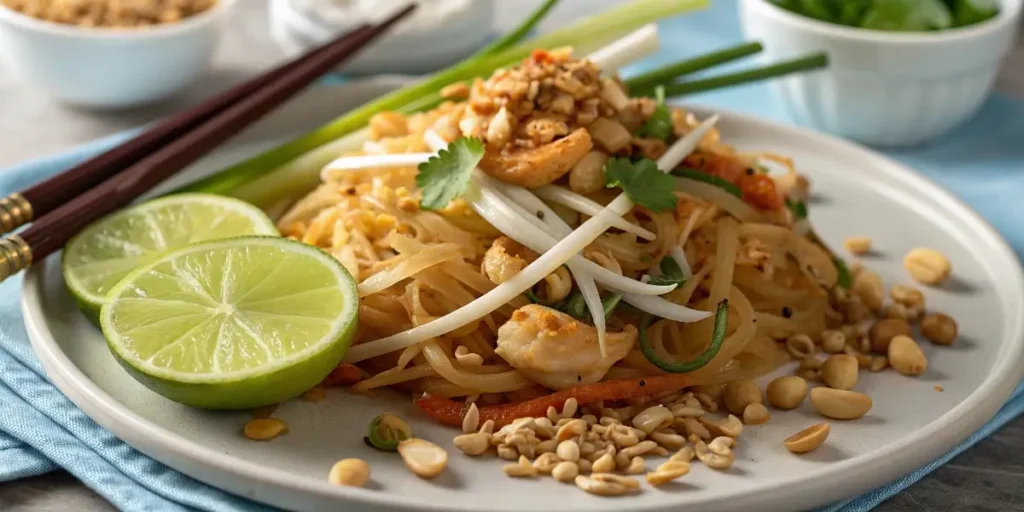
A true Pad Thai recipe isn’t complete without its finishing touches. In Thailand, presentation and balance are just as important as taste — every element adds texture, color, and freshness. Here’s how to serve it the authentic way.
1. Fresh Lime Wedges
Always serve lime wedges on the side. Diners can squeeze them over their noodles for a pop of tangy freshness that cuts through the sauce’s sweetness.
2. Crushed Peanuts
A handful of roasted, unsalted crushed peanuts brings crunch and nutty aroma. Sprinkle just before serving to keep them crisp.
3. Bean Sprouts
Serve a small pile of fresh bean sprouts on top or on the side. Their cool, crisp texture contrasts perfectly with warm noodles.
4. Thai Chili Flakes & Sugar
Thai restaurants often serve four condiments—lime, chili flakes, fish sauce, and sugar. The idea is to adjust flavors to personal taste. Offer this “table set” to give guests the same experience at home.
5. Cilantro and Green Onions
These fresh herbs add color and fragrance. Chop finely and scatter on top for a professional touch.
Looking for inspiration? Try our Delicious Smoked Salmon Brine Recipe for an example of how seasoning balance can transform simple ingredients.
Pairing Pad Thai with the Right Sides and Drinks
Pad Thai is a complete meal on its own, but thoughtful sides and drinks can enhance your Thai dining experience.
1. Thai Cucumber Salad (Som Tum Style)
Refreshing, tangy, and a bit spicy — it complements Pad Thai’s sweet-savory base beautifully.
2. Coconut Soup (Tom Kha Gai)
Creamy coconut milk and lemongrass bring contrast to Pad Thai’s brightness.
3. Iced Thai Tea or Lemongrass Iced Drink
The mild sweetness and floral aroma of Thai tea pair perfectly with spicy noodles.
4. Fresh Fruit Platter
End with chilled pineapple or mango for a light, tropical finish.
If you want another refreshing Thai-inspired pairing, check out our Mango Sticky Rice in Rice Cooker — it’s simple, comforting, and brings authentic Thai sweetness to your table.
Conclusion: Mastering the Art of Homemade Pad Thai
Mastering a great Pad Thai recipe isn’t about complexity—it’s about balance, freshness, and technique. When you combine the right ingredients—rice noodles, chicken, tamarind, palm sugar, and fresh lime—you get that authentic harmony of sweet, salty, and tangy that makes Thai cuisine so special.
Cooking Pad Thai at home is easier than it looks. With a hot wok, a little patience, and the right sauce, you can create restaurant-quality flavor in under 30 minutes. Whether you’re making a traditional chicken version or a lighter, gluten-free variation, every bite will transport you straight to a Thai street market.
Don’t miss our Delicious Asian Desserts for the perfect sweet finish after your Thai feast. Or, if you love global comfort foods, check out our Peruvian Chicken Recipe—another flavorful, vibrant dish that’s just as easy to make at home.
FAQs
What are the ingredients in Pad Thai?
A traditional Pad Thai recipe includes rice noodles, chicken or shrimp, eggs, bean sprouts, tofu, green onions, and a rich tamarind-based sauce. The sauce blends fish sauce, palm sugar, and tamarind paste for that signature sweet-sour-salty flavor. Toppings like crushed peanuts, fresh lime, and cilantro add crunch and brightness.
What is the secret ingredient in Pad Thai?
Without question, the secret ingredient is tamarind paste. It delivers the dish’s tangy punch and signature balance that defines authentic Pad Thai. It’s the reason homemade versions often fall short—many skip tamarind, but nothing replicates its flavor exactly. If tamarind is unavailable, try a mix of lime juice and brown sugar as a quick substitute.
What’s the secret to great Pad Thai?
The secret lies in balance and timing. Great Pad Thai isn’t too sweet or too salty — it’s perfectly balanced between tamarind’s tang, palm sugar’s sweetness, and fish sauce’s savoriness. Cooking it over high heat in a wok for just the right amount of time (usually 3–4 minutes) ensures smoky flavor and non-soggy noodles.
What are the three ingredients in Pad Thai sauce?
The holy trinity of Pad Thai sauce is:
Tamarind paste (for tang)
Fish sauce (for salt and umami)
Palm sugar (for sweetness)
This trio defines the sauce’s unique complexity. For an extra layer of depth, many chefs add rice vinegar or lime juice for brightness.
Can I make Pad Thai without tamarind?
Yes, you can still make delicious Pad Thai without tamarind! Mix 1 tablespoon lime juice + 1 teaspoon brown sugar for each tablespoon of tamarind paste called for. It won’t taste 100% authentic, but it will still capture that sweet-sour balance beautifully.
What makes Pad Thai taste authentic?
Authentic Pad Thai tastes the way it does because of tamarind, fish sauce, palm sugar, and a quick, hot wok toss. The noodles should be lightly smoky, slightly chewy, and coated in a glossy sauce—not drenched. Balance, speed, and freshness are everything. Garnish with peanuts, lime, and sprouts to get that true Thai street-food experience.