
White Chocolate Bark: The Ultimate Guide to a Creamy, Crunchy Delight
There’s something irresistible about the glossy snap of white chocolate bark—a treat that’s both creamy and crunchy, melting sweetly in your mouth. This simple dessert has earned a place at every festive table, from Christmas gatherings to cozy family weekends. In this guide, we’ll explore what white chocolate bark is made of, how it differs from white bark or almond bark, why it’s even called “bark,” and how you can make the best homemade version right in your kitchen.
Don’t miss our white-hot chocolate recipe if you love creamy desserts like this one—check it out here to make your next winter evening even cozier.
Table of Contents
What Is White Chocolate Bark?
What is white chocolate bark made of?
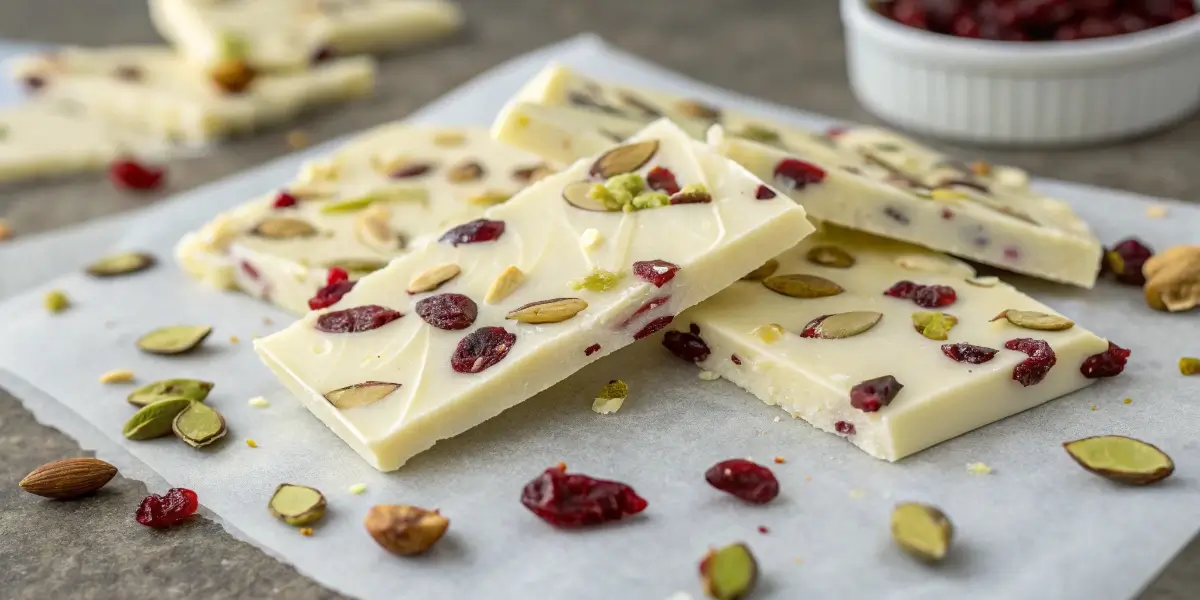
At its heart, white chocolate bark is a simple confection made by melting high-quality white chocolate and spreading it thinly across a flat surface before topping it with mix-ins. The ingredients usually include white chocolate (or white chocolate chips), nuts, dried fruit, pretzels, or candy bits. After cooling, it’s broken into “bark-like” shards—hence the name.
Unlike dark or milk chocolate, white chocolate doesn’t contain cocoa solids. Instead, it’s made from cocoa butter, sugar, milk solids, and vanilla, giving it that signature creamy sweetness. When done right, it’s smooth, melts easily, and provides a wonderful base for endless variations.
To make your own, start by melting white chocolate gently using a double boiler or microwave in short bursts. Spread it thinly on parchment paper, sprinkle your favorite toppings (like crushed peppermint, almonds, or cranberries), and let it harden before breaking into pieces.
Pro Tip: Always use real white chocolate with cocoa butter—not “white baking chips” or “candy coating.” Those substitutes lack the rich flavor and glossy texture that make white chocolate bark stand out.
The simple science behind white chocolate bark texture
The magic of chocolate bark lies in tempering—the process of heating and cooling chocolate to stabilize its fat crystals. Proper tempering ensures your bark has a beautiful sheen, crisp snap, and smooth melt.
If you skip tempering, your bark might turn dull or develop gray streaks called “bloom.” To avoid that, melt two-thirds of your chocolate, remove it from the heat, and stir in the remaining one-third until smooth. This technique brings the chocolate to the right working temperature without losing its shine.
For easy success, many home bakers use the “seeding method,” which guarantees a stable texture with minimal effort.
Learn more about tempering and chocolate recipes in our chocolate-covered Rice Krispie treats guide—a perfect next read if you’re exploring sweet snack ideas.
Difference Between White Chocolate and White Bark
White chocolate vs white bark: ingredients compared
Many people use the terms “white chocolate” and “white bark” interchangeably—but they’re not quite the same.
White chocolate is made from cocoa butter, sugar, and milk solids, while white bark (or almond bark) is typically a confectionery coating made from vegetable fats instead of cocoa butter. Because of this, white bark is cheaper, easier to melt, and often used for coating candies or pretzels.
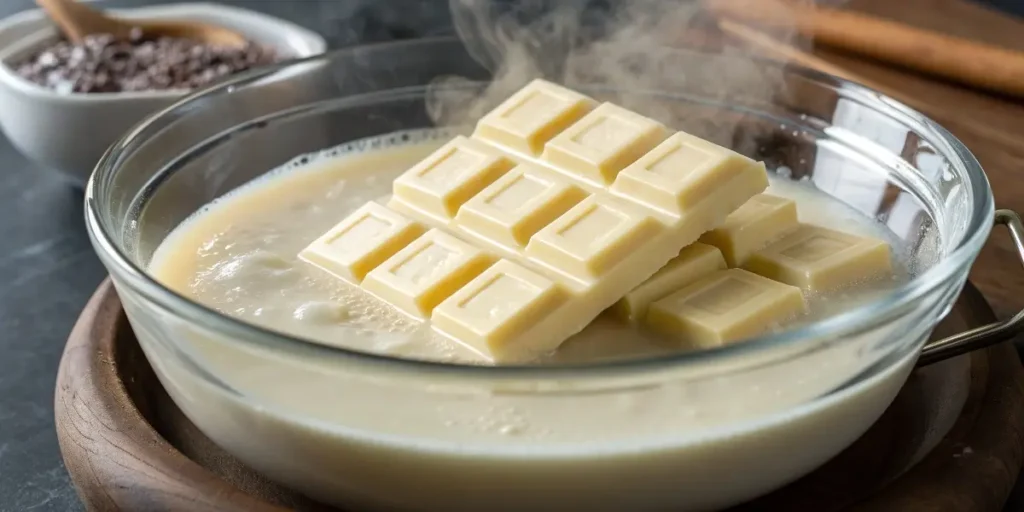
Here’s a quick comparison table for clarity:
| Feature | White Chocolate | White Bark (Almond Bark) |
|---|---|---|
| Fat Source | Cocoa Butter | Vegetable Oils |
| Flavor | Rich, creamy, buttery | Sweet, less complex |
| Melting Point | Lower | Higher (less temperamental) |
| Texture | Smooth, melts in mouth | Slightly waxy |
| Ideal Use | Premium desserts | Quick candy coating |
So while both look similar, true white chocolate bark offers a superior flavor that pairs beautifully with fruit, nuts, and cookies.
Which one melts better for desserts?
If you’re short on time, white bark (also known as candy coating) melts faster and is less prone to seizing. However, white chocolate delivers a more decadent, melt-in-your-mouth result when handled properly.
For the best of both worlds, try mixing real white chocolate with a small portion of almond bark—you’ll get both smooth texture and stability.
Don’t miss our pistachio no-bake cheesecake for another creamy dessert that complements your homemade white chocolate bark beautifully.
Why Is Chocolate Called “Bark”?
Origin of the term “bark” in chocolate making
The name “chocolate bark” might sound unusual at first, but it’s surprisingly simple. The term “bark” comes from the appearance of the chocolate once it hardens and is broken into uneven pieces, which resemble tree bark. This rustic presentation became a hallmark of homemade candies during the mid-20th century, especially for the holidays.
Originally, chocolate bark started as a handmade confection made from leftover chocolate and nuts, poured onto sheets and left to set. The jagged shards looked like bark peeling off a tree—hence the name. Over time, it became a festive staple, with white chocolate bark joining the family as a sweeter, creamier variation.
How the name shaped holiday dessert traditions
The bark’s rustic charm made it perfect for Christmas, Valentine’s Day, and Easter celebrations. Families began customizing it with colorful toppings like crushed peppermint, sprinkles, and freeze-dried fruits. This treat quickly became a go-to homemade gift—easy to make, beautifully customizable, and irresistibly delicious.
If you’re exploring other festive desserts, don’t miss our no-bake 4th of July desserts for creative seasonal sweets.
Easy Homemade White Chocolate Bark Recipe
Ingredients you need for white chocolate bark
Making white chocolate bark doesn’t require fancy tools or hard-to-find ingredients. Here’s a simple list to get started:
| Ingredient | Quantity | Notes |
|---|---|---|
| White chocolate (high-quality, with cocoa butter) | 12 oz | Use chopped bars or chips |
| Dried cranberries | ½ cup | Adds a tart contrast |
| Sliced almonds or pistachios | ½ cup | For crunch and color |
| Vanilla extract | ½ tsp | Optional, enhances flavor |
| Sea salt | A pinch | Balances sweetness |
Optional add-ins: mini pretzels, crushed cookies, or festive sprinkles.
Step-by-step guide to make it perfect every time
- Prepare your tray: Line a baking sheet with parchment paper.
- Melt the chocolate: Use a double boiler or microwave in 15-second intervals, stirring often until smooth.
- Add flavor: Stir in vanilla extract and a pinch of salt.
- Spread and top: Pour the melted chocolate onto the parchment and spread to ¼-inch thickness.
- Add toppings: Sprinkle dried fruit, nuts, or candies evenly over the surface.
- Set and break: Refrigerate for 30 minutes until firm. Break into bark-like pieces.
That’s it! In less than an hour, you’ve got a stunning, gift-worthy treat. For another melt-in-your-mouth dessert, check out our cottage cheese desserts—light, creamy, and perfect after dinner.
Creative Variations of White Chocolate Bark
White chocolate peppermint bark for holidays
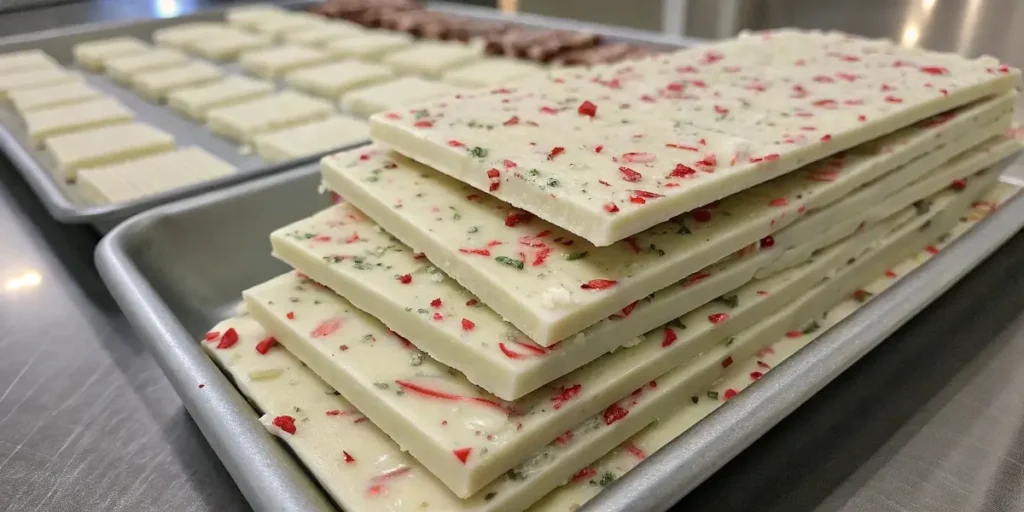
Few desserts say “holiday season” like peppermint bark. Simply melt white and dark chocolate separately, spread a layer of dark chocolate first, chill it briefly, then add the white chocolate layer on top. Sprinkle crushed peppermint candies before it sets.
This version offers that perfect mix of cool peppermint and creamy sweetness, making it a hit at holiday parties and as edible gifts.
Fruit and nut white chocolate bark for everyday treats
For an everyday snack, go for a fruit and nut combination. Mix chopped dried apricots, pistachios, and cranberries into the melted chocolate before spreading it. This adds color, texture, and a natural sweetness that balances the white chocolate’s creaminess.
You can also drizzle a bit of dark chocolate over the top for a gourmet look. Pair your bark with a warm drink—like our virgin piña colada recipe—for a refreshing non-alcoholic twist.
Is Almond Bark Just White Chocolate?
What makes almond bark different from white chocolate bark
Despite the name, almond bark doesn’t always contain almonds—or real chocolate! It’s a confectionery coating made from vegetable fats, sugar, and flavoring designed to mimic chocolate. Because it’s easier to melt and set, almond bark is often used for dipping strawberries, pretzels, or candies.
White chocolate bark, on the other hand, contains cocoa butter, which gives it that buttery richness and authentic flavor.
Best uses for almond bark in baking and candy making
If you’re in a rush, almond bark is perfect for:
- Coating snacks like popcorn or pretzels.
- Drizzling over cookies for a quick decorative touch.
- Mixing with cereals to create snack clusters.
While almond bark is practical, true white chocolate bark wins in flavor and texture when you want something indulgent.
For another easy dessert, check out our delicious matzo crack recipe—a fun candy-like treat similar in texture to bark.
Pro Tips for Perfect White Chocolate Bark Every Time
How to temper white chocolate for smooth results
Tempering may sound complicated, but it’s easy once you get the hang of it. The goal is to align cocoa butter crystals so the bark sets shiny and crisp.
Here’s how:
- Melt two-thirds of your chocolate to about 110°F (43°C).
- Remove from heat, stir in the remaining one-third until the temperature drops to 84°F (29°C).
- Warm it slightly to 88–90°F (31–32°C) before spreading.
Tempering ensures your bark doesn’t melt at room temperature and keeps its sheen.
Storing and packaging white chocolate bark like a pro
Keep your bark in an airtight container at cool room temperature (65–70°F). Avoid the refrigerator unless your kitchen is warm—it can cause condensation and sugar bloom.
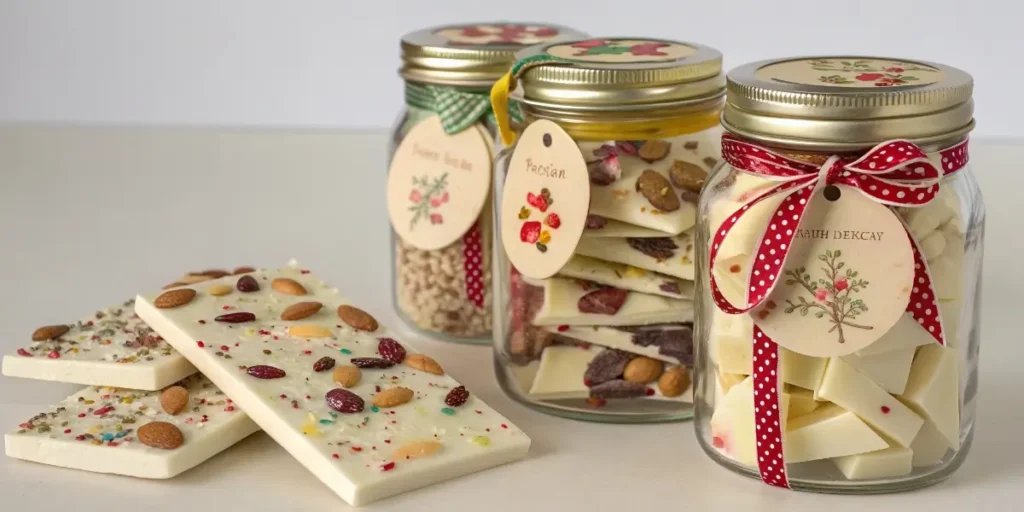
For gifting, place bark pieces in cellophane bags or mason jars, add a ribbon, and you have a beautiful handmade present.
Looking for more edible gift ideas? Don’t miss our chocolate strawberries guide for elegant gifting inspiration.
Fun Ways to Serve and Gift White Chocolate Bark
DIY gift ideas using white chocolate bark
White chocolate bark makes a thoughtful gift when packaged creatively. Try layering bark shards in clear jars or wrapping them in parchment with twine. Add labels like “Winter Wonderland Bark” or “Peppermint Bliss.”
You can even make custom flavor sets—mixing nuts, caramel bits, or freeze-dried raspberries.
Pairing white chocolate bark with drinks and snacks
For an indulgent dessert platter, pair your bark with berries, coffee, or spiced tea. Its creamy sweetness balances strong drinks perfectly. You can also crumble it over ice cream, pancakes, or yogurt bowls for an extra touch of decadence.
Explore pairing ideas in our delicious Easter desserts collection for more seasonal serving inspiration.
Conclusion: A Sweet Finish to Every Occasion
White chocolate bark is one of those desserts that looks fancy but couldn’t be simpler to make. With just a few quality ingredients and a dash of creativity, you can whip up a treat that’s both elegant and comforting. Whether you’re layering it with peppermint for the holidays, swirling it with fruit and nuts for everyday snacking, or gifting it in cute jars to friends, this creamy confection never disappoints.
Its beauty lies in its versatility—no baking, no stress, just pure indulgence. So the next time you’re craving something sweet yet effortless, reach for white chocolate, melt, mix, and let your imagination do the rest. Once it sets, you’ll have more than just candy—you’ll have a piece of homemade happiness that’s meant to be shared.
Looking for more sweet inspiration? Don’t miss our delicious Easter desserts ideas to complement your next dessert table.
FAQs
What is white chocolate bark made of?
White chocolate bark is made from melted white chocolate (containing cocoa butter, milk solids, sugar, and vanilla) that’s spread thin and topped with mix-ins like nuts, dried fruit, or candy pieces. Once cooled, it’s broken into bark-like shards.
What is the difference between white chocolate and white bark?
Though they look similar, the difference lies in the ingredients. White chocolate is made with cocoa butter, giving it a rich, buttery flavor. White bark (or almond bark) is a confectionery coating made from vegetable fats, which melts easily but lacks the true chocolate taste.
Why is chocolate called bark?
It’s called “bark” because of its appearance once hardened—the uneven, rustic pieces resemble the outer bark of a tree. The name stuck as the treat gained popularity in home kitchens and holiday candy boxes.
Is bark the same as chocolate?
Not exactly. “Bark” refers to a style of candy made with a chocolate base. While the base can be milk, dark, or white chocolate, the term “bark” describes how it’s poured flat, topped, and broken apart—not the chocolate itself.
Is almond bark just white chocolate?
No, almond bark is not real white chocolate. It’s a chocolate-like candy coating used for dipping and decorating, made with vegetable oils instead of cocoa butter. It’s convenient but doesn’t have the same creamy flavor or smooth melt as true white chocolate.
What do you mean by bark?
In candy-making, “bark” means a thin sheet of chocolate layered with toppings and broken into irregular pieces. It’s a no-bake treat that’s simple to make and perfect for gifting or snacking.