
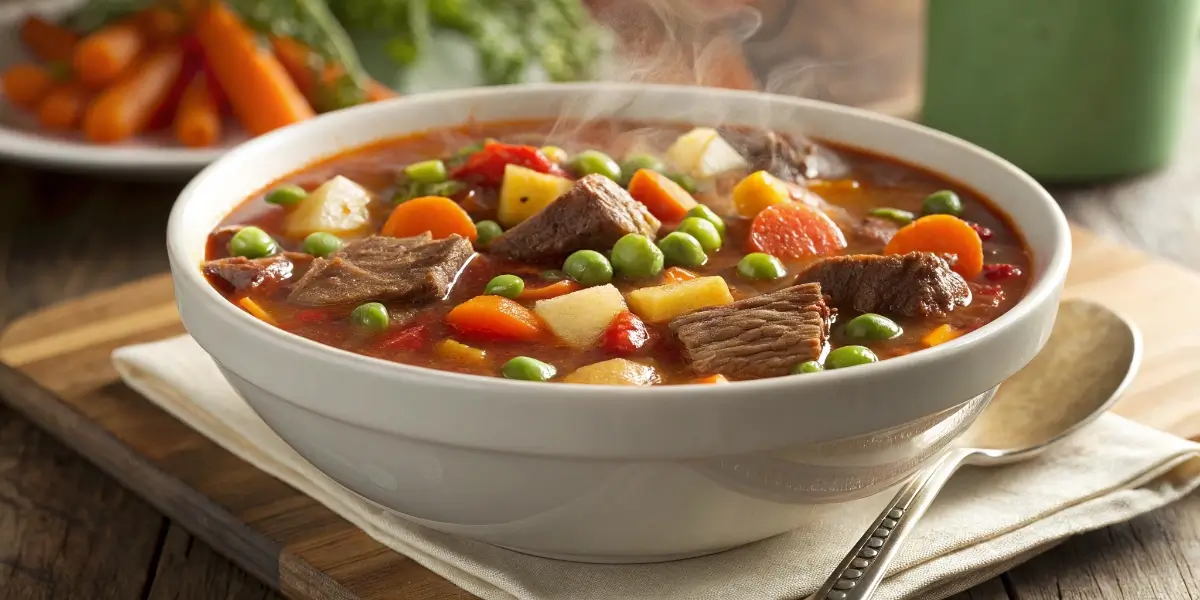
Hearty Vegetable Beef Soup Recipe – The Ultimate Comfort Bowl
When it comes to soul-warming meals that feel like a hug in a bowl, nothing beats a classic vegetable beef soup recipe. It’s a timeless dish that combines tender chunks of beef, colorful vegetables, and a deeply savory broth simmered to perfection. Whether you’re craving something cozy for a chilly evening or need a wholesome one-pot meal that pleases the whole family, this soup delivers both comfort and nutrition.
This guide walks you through everything—from the best beef cuts and flavor secrets to chef-approved tips and make-ahead storage tricks. Plus, we’ll explore how experts like Jamie Oliver make vegetable soup irresistible and what ingredients can take your homemade version to the next level.
Looking for inspiration? Try Instant Pot Vegetable Beef Soup for a quick, fuss-free dinner idea.
Table of Contents
What Makes This Vegetable Beef Soup Recipe So Special
The Timeless Comfort of Homemade Beef Soup
There’s something beautifully nostalgic about a steaming bowl of homemade vegetable beef soup—the aroma alone can transport you back to family kitchens and cozy Sunday dinners. What sets this recipe apart is how it balances deep, meaty flavor with the freshness of garden vegetables. Each ingredient serves a purpose: beef provides richness, vegetables add texture and nutrients, and herbs tie everything together with earthy warmth.
Homemade versions beat canned or store-bought soups every time because you control the quality and flavor. Using fresh vegetables like carrots, celery, peas, and green beans ensures every spoonful bursts with color and nutrition. Plus, when you simmer it low and slow, the flavors meld beautifully into a broth that’s hearty yet light enough for any season.
The best part? You can adjust it to your taste or dietary needs—swap in lean beef, add extra veggies, or go for a low-sodium broth without sacrificing flavor. The result is a meal that feels indulgent but is packed with goodness.
Why This Version Stands Out for Flavor and Simplicity
Many vegetable beef soup recipes rely on shortcuts like canned soup bases or heavy seasoning blends, but this recipe proves you don’t need them. The secret lies in layering flavor naturally. Browning the beef first releases caramelized bits that enrich the broth. Next, sautéing onions, garlic, and herbs adds depth that builds as the soup simmers.
Another standout feature is its flexibility. Whether you cook it in a Dutch oven, slow cooker, or Instant Pot, the flavor holds strong. The recipe is also alcohol-free and pork-free, making it family-friendly and suitable for most dietary preferences.
If you’re aiming for that old-fashioned, home-cooked flavor—think cozy and satisfying without being overly rich—this is your go-to. It’s simple, wholesome, and heartwarming.
Check out 10 Vegetable Soup Recipe to explore another nutrient-packed soup idea that complements this dish perfectly.
Essential Ingredients for the Best Vegetable Beef Soup
Choosing the Right Beef Cuts for Tenderness
The foundation of any great vegetable beef soup recipe begins with choosing the right cut of beef. You’ll want a type that turns tender and flavorful after slow simmering. Chuck roast, stew meat, or even beef shank are top choices because they contain just enough marbling to create a rich, hearty broth. These cuts break down beautifully, giving the soup that melt-in-your-mouth texture you crave.
Before adding the beef to the pot, always brown it. This simple step caramelizes the exterior, unlocking deep, savory notes that elevate the entire dish. When the beef sizzles in the pot, those little brown bits (called fond) stick to the bottom—don’t toss them out! Once deglazed with broth, they infuse every spoonful with flavor.
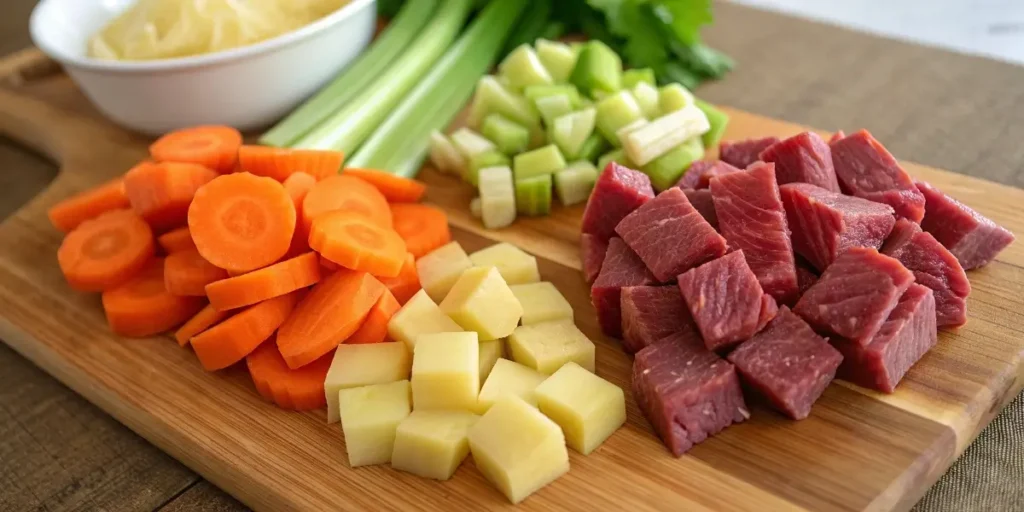
If you prefer a leaner option, you can use sirloin or ground beef. Just remember, leaner cuts may need a splash more olive oil and extra simmer time for richness. Either way, the secret lies in slow cooking—giving the beef time to release its full flavor and soften perfectly.
For a faster alternative, check out Gluten-Free Crock Pot Beef Stew Recipe for a tender, healthy twist you can adapt for your soup base.
Fresh Vegetables That Bring Balance and Color
Vegetables are the heart of this soup, bringing color, texture, and nutrients to every bite. The classic mix includes carrots, celery, potatoes, green beans, and peas—but don’t stop there. Corn, zucchini, or even diced tomatoes add brightness and variety. The goal is to balance sweetness and savoriness, ensuring each spoonful feels complete.
When prepping your vegetables, try to keep them cut to similar sizes so they cook evenly. Root vegetables like carrots and potatoes should go in first since they need longer to soften. Lighter ones—like green beans and peas—should be added near the end to stay crisp and vibrant.
For those who like a touch of sweetness, a few diced sweet potatoes can replace regular ones. They not only thicken the broth naturally but also add color and a subtle, earthy flavor.
Don’t miss our Cabbage Kielbasa Soup Recipe for another colorful, hearty option that complements your weekly meal prep lineup.
Step-by-Step: How to Make Vegetable Beef Soup Like a Pro
Preparation Tips for Maximum Flavor
Cooking a hearty vegetable beef soup recipe isn’t just about tossing ingredients into a pot. The secret lies in layering flavors thoughtfully. Start by heating olive oil in a large Dutch oven or heavy-bottomed pot. Sear the beef cubes on all sides until browned—this step locks in juices and builds that rich, savory base. Don’t overcrowd the pan; cook in batches if needed for an even sear.
Once the beef is browned, set it aside and sauté your aromatics—onion, garlic, and celery—right in the same pot. This allows them to soak up all the flavor from the beef fond. Add your herbs like thyme, bay leaf, and parsley, then stir in carrots and potatoes. Sautéing vegetables before adding liquid enhances their natural sweetness and depth.
Next, deglaze the pot with a bit of low-sodium beef broth, scraping up every flavorful bit from the bottom. Pour in the remaining broth, add the browned beef, and let everything simmer gently. It’s here where magic happens—the ingredients mingle, flavors deepen, and your kitchen fills with a comforting aroma.
Check out Pot Roast Seasoning to explore spice blends that can take your beef soup’s flavor to restaurant-level quality.
Simmering Secrets for Perfect Consistency
A perfect vegetable beef soup has balance: tender meat, soft yet firm vegetables, and a broth that’s rich but not greasy. Achieving that comes down to simmering smartly. Once your soup reaches a gentle boil, reduce the heat to low and let it simmer uncovered for about 1 to 1½ hours. This slow simmer allows the collagen in the beef to break down, creating a luscious, silky broth without needing added fats.
About halfway through, skim off any foam that rises to the surface to keep your soup clear and light. In the last 15 minutes, add tender vegetables like peas, corn, and green beans—these cook quickly and maintain their color. Taste and adjust seasoning with salt, pepper, and a dash of garlic powder or paprika for extra warmth.
If your soup turns out too thin, simply let it simmer longer to reduce naturally. For a slightly thicker texture, mash a few potatoes or blend a small portion of the soup, then stir it back in.
For another cozy, flavor-rich recipe made similarly, learn more about Santa Fe Soup Recipe—it uses layering and simmering techniques that deliver bold, balanced results.
The Secret to a Flavorful Beef Soup
Building Layers of Flavor Without Using Alcohol
Many recipes rely on red wine or cooking sherry to deepen broth flavor—but you can achieve the same richness in your vegetable beef soup recipe without a drop of alcohol. The secret is in layering ingredients that naturally enhance umami and depth.
Start with a solid base: well-browned beef and aromatics like onions, celery, and garlic. These are your “flavor builders.” Then, instead of alcohol, use low-sodium beef broth or homemade stock, combined with a tablespoon of tomato paste for richness and color. Tomato paste adds that slow-cooked, hearty taste instantly.
For extra savoriness, toss in a dash of soy sauce or Worcestershire sauce (look for alcohol-free versions). They bring that salty, earthy flavor that wine often contributes. A splash of balsamic vinegar—again, alcohol-free—adds gentle acidity to balance the broth and lift the entire dish.
Don’t forget the herbs and spices. Bay leaves, thyme, and parsley are traditional, but rosemary and paprika can add beautiful depth. When simmered slowly, these herbs infuse the soup with fragrance that’s warm, comforting, and complex.
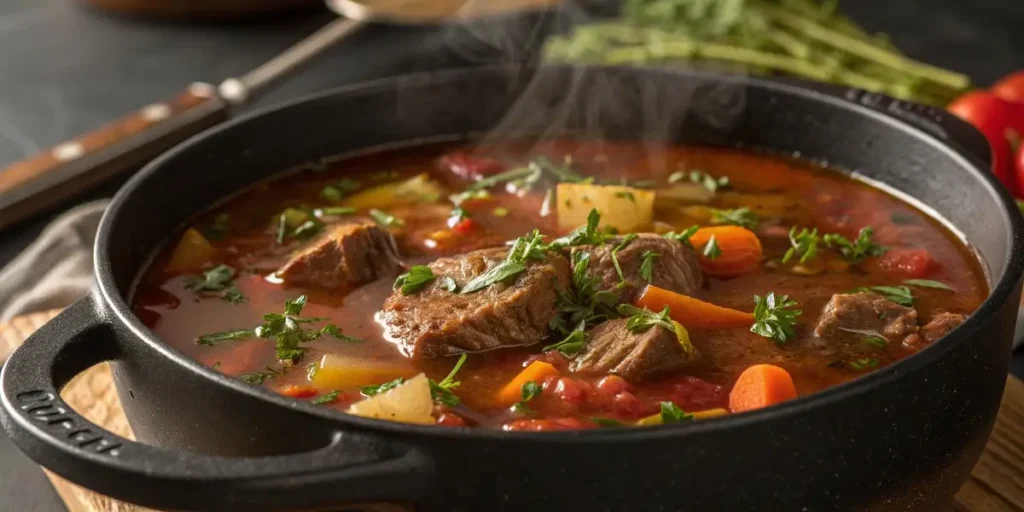
Check out Steak Seasoning Recipe for more inspiration on spice blends that can elevate your broth without overpowering the natural flavors.
The Magic of Herbs, Spices, and Slow Cooking
If there’s one thing that separates a good vegetable beef soup from a truly memorable one, it’s patience. Slow cooking allows flavors to develop layer by layer. As the beef softens, its juices blend with the vegetables and herbs, creating that signature home-cooked aroma that no shortcut can replicate.
The key is to season gradually. Add half your seasonings at the start and save the rest for the final 15 minutes of cooking. This ensures the herbs don’t lose their freshness. For a flavor boost, finish with a sprinkle of freshly chopped parsley or a squeeze of lemon juice before serving—it brightens the broth and balances the richness beautifully.
Want a smoother texture? Ladle out a cup of soup, blend it, and stir it back in. It thickens naturally while keeping all the wholesome goodness intact.
For a similar comforting and aromatic option, don’t miss our Caldo de Pollo Recipe—a traditional Mexican chicken soup that also builds layers of flavor without alcohol.
How Jamie Oliver and Other Chefs Make Vegetable Soup Shine
Jamie Oliver’s Rustic Vegetable Soup Technique
Celebrity chef Jamie Oliver is known for transforming simple, everyday dishes into restaurant-quality meals—and his take on vegetable soup is no exception. His version focuses on freshness, layering, and technique rather than fancy ingredients. To adapt his approach for your vegetable beef soup recipe, think of your pot as a canvas for building flavor naturally.
Jamie begins with a generous splash of olive oil, then adds chopped onions, garlic, and herbs like thyme and rosemary to create a fragrant base. He recommends “sweating” the vegetables slowly instead of sautéing them on high heat. This gentle process helps release their natural sweetness without burning, which is key to a deeper, more balanced flavor.
Once the aromatics are soft, he adds diced vegetables in layers—carrots, celery, and potatoes first, followed by softer ones like zucchini and peas later. For a beef-based version, you’ll want to add browned chunks of beef and broth at this stage, allowing the meat to infuse the soup with rich umami as it simmers.
Jamie’s golden rule? Season in stages and taste constantly. This prevents over-salting and keeps flavors vibrant. He finishes his soups with a drizzle of olive oil or a squeeze of lemon juice right before serving, which lifts the flavors and adds that signature “fresh finish.”
For another flavor-packed, chef-style soup, check out Goya Split Pea Soup Recipe for ideas on achieving creamy textures and rich depth with simple, accessible ingredients.
How to Adapt Professional Tricks to Your Home Kitchen
Professional chefs like Gordon Ramsay, Ina Garten, and Jamie Oliver all share one principle—simplicity with precision. You don’t need a commercial kitchen to apply their wisdom at home; just a few tweaks can elevate your vegetable beef soup to gourmet level.
- Roast your vegetables before simmering. Roasting root vegetables like carrots and potatoes enhances their sweetness and adds a subtle smokiness that deepens the broth.
- Use fresh herbs at the end. Dried herbs build depth, but fresh parsley, dill, or thyme added before serving make the flavor pop.
- Control temperature. Keep your soup at a gentle simmer. A rolling boil breaks down veggies too fast, muddying both texture and taste.
- Balance is key. If your soup tastes too heavy, a touch of acidity—like lemon juice or tomato—can bring it back to life.
Want a fusion twist on this idea? Discover great ideas like Thai Tom Yum Recipe—a soup that uses similar layering techniques but with bold Southeast Asian spices that can inspire new variations of your beef soup.
Boosting the Flavor – What to Add to Vegetable Soup
Natural Umami Boosters and Seasoning Ideas
If your vegetable beef soup recipe tastes fine but not fantastic, it might be missing a touch of umami—the fifth taste that makes food deeply satisfying. Luckily, you don’t need artificial enhancers or alcohol to achieve it. The key lies in natural ingredients that boost savory depth while keeping the soup healthy.
Start with tomato paste or sun-dried tomatoes, both excellent for creating richness. Soy sauce (low sodium or gluten-free) is another umami powerhouse that enhances beef flavor. For extra complexity, a spoonful of miso paste or a dash of fish sauce (use sparingly) adds subtle depth without overpowering.
Mushrooms are also an underrated addition. Whether you toss in fresh baby bellas or use dried shiitake, they enrich the broth with an earthy tone. Just sauté them before adding to your pot so they develop a caramelized flavor.
Seasoning matters, too. A mix of smoked paprika, garlic powder, and black pepper can transform a mild broth into a flavor-packed base. For heat, try a pinch of red chili flakes or cayenne. Just remember: less is more—let the beef and veggies remain the stars.
Check out Spicy Canned Tuna Recipe for inspiration on how to layer spicy and savory flavors naturally in soups and stews.
Healthy Swaps That Enhance Depth and Taste
Flavor doesn’t always have to mean heavy or salty. In fact, with a few smart swaps, you can keep your vegetable beef soup vibrant, wholesome, and full of taste.
- Swap salt for herbs and spices. Use rosemary, thyme, and parsley to flavor your broth instead of extra sodium. These herbs work beautifully with beef and vegetables.
- Use vegetable broth in combination with beef broth. This trick lightens the soup while adding complexity from plant-based flavors.
- Add acidity to balance. A small splash of apple cider vinegar or lemon juice before serving can make the soup taste brighter and fresher.
- Include root veggies like parsnips or turnips. They naturally sweeten the soup and pair perfectly with beef.
If you’re looking to experiment, don’t miss our Roasted Butternut Squash Recipe—it demonstrates how roasting vegetables can unlock layers of sweetness you can easily adapt for your soup.
Creative Variations of Vegetable Beef Soup
Low-Sodium and Gluten-Free Adaptations
The beauty of a great vegetable beef soup recipe lies in its versatility—you can easily adjust it to suit any dietary preference without losing its comforting appeal. For those watching their sodium intake, the key is to build flavor naturally. Start with low-sodium beef broth and layer your soup with herbs like thyme, oregano, and bay leaves instead of relying on salt. Garlic, black pepper, and smoked paprika also help achieve a full-bodied taste without extra sodium.
For a gluten-free version, skip any bouillon cubes or seasoning packets that may contain wheat. Instead, make your own broth using beef bones, carrots, celery, and onions. This not only makes the soup richer but ensures it’s safe for those with sensitivities. If you want a slight thickening effect, mashed potatoes or pureed carrots are excellent natural thickeners—no flour needed.
Another great trick is to add cooked quinoa or rice for heartiness instead of pasta or barley. These gluten-free grains absorb flavor beautifully while keeping the texture light.
Learn more about Gluten-Free Chicken Noodle Soup for a base recipe that shares the same comforting style and clean, allergen-safe approach.
Slow Cooker, Instant Pot, and Stovetop Versions
No matter your cooking style, this vegetable beef soup can fit seamlessly into your kitchen routine. Let’s break down three popular methods:
- Slow Cooker: Perfect for busy days. Simply brown your beef first, then add all ingredients to the slow cooker. Cook on low for 7–8 hours or high for 4–5 hours. This method gives you ultra-tender beef and deeply infused flavor.
- Instant Pot: A lifesaver when you’re short on time. Sauté the beef and vegetables using the “Sauté” function, add your broth, seal the lid, and cook on high pressure for 30 minutes. Let the pressure release naturally for best results.
- Stovetop: The traditional route. Sear the beef, add your vegetables and broth, then simmer uncovered for about 90 minutes. Stir occasionally to keep everything even and aromatic.
Each method offers slightly different textures, but the flavor payoff remains the same—warm, rich, and comforting.
For more slow-cooked inspiration, check out Crockpot Creamy Chicken Noodle Soup—a fantastic model for how to balance creamy and savory flavors using time and technique.
Common Mistakes to Avoid When Making Vegetable Beef Soup
Overcooking or Under-Seasoning
Even the best vegetable beef soup recipe can fall flat if timing and seasoning aren’t handled right. Overcooking is one of the most common pitfalls—when beef or vegetables simmer too long, they can turn mushy and lose flavor. To prevent this, always simmer gently instead of boiling. Keep an eye on texture: beef should be fork-tender but not shredding apart, and vegetables should hold their shape while still being soft enough to bite.
Under-seasoning is the next big mistake. Soup needs seasoning at multiple stages—not just at the end. Salt, pepper, and herbs should be added gradually throughout the cooking process to layer flavor evenly. Adding everything at once can result in a flat-tasting broth, no matter how long it simmers.
Another overlooked point: tasting as you go. Each adjustment—whether it’s a pinch of salt, a dash of paprika, or a splash of vinegar—should balance the soup, not mask it. If your broth tastes dull, add acidity (like lemon juice or tomato) rather than more salt.
For a perfectly balanced broth, check out Homemade Chicken and Gravy—it uses gradual seasoning and simmering methods similar to this soup for restaurant-quality flavor at home.
Choosing the Wrong Vegetables or Timing
Vegetables add both nutrition and texture, but adding them at the wrong time can ruin even the best vegetable beef soup. Hard vegetables such as carrots, potatoes, and parsnips should go in early since they need longer to soften. Meanwhile, softer vegetables—like peas, zucchini, or spinach—should be added toward the end of cooking to prevent them from becoming soggy.
Another frequent error is not cutting the vegetables evenly. Uneven chunks lead to inconsistent cooking, resulting in a mix of overcooked and undercooked bites. Aim for uniform pieces around ½-inch thick for a balanced texture in every spoonful.
Finally, don’t skip skimming the surface. Fat and foam that rise while simmering can cloud your broth and leave a greasy aftertaste. Use a ladle to skim every 20 minutes for a clean, clear finish.
For another soup that relies on perfect timing and vegetable balance, discover great ideas like Panera Chicken Tortilla Soup—it showcases how to layer ingredients for consistent texture and vibrant color.
Serving Ideas and Storage Tips
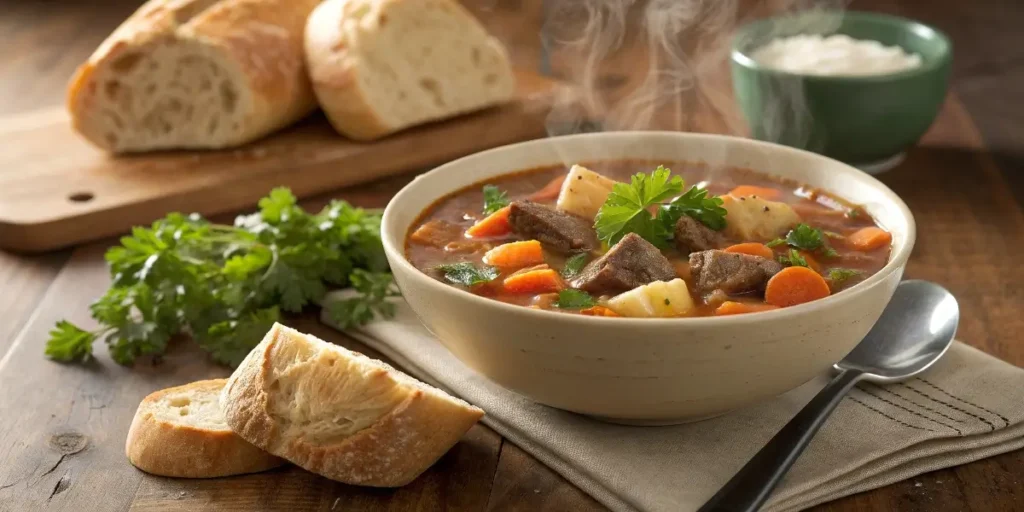
What to Serve with Vegetable Beef Soup
A bowl of vegetable beef soup recipe is satisfying on its own, but the right side dish can turn it into a full, heartwarming meal. The key is balance—something light, fresh, or comforting to complement the soup’s rich and savory flavors.
Crusty bread is the timeless pairing. Think of a warm baguette, garlic toast, or a slice of sourdough to soak up that flavorful broth. If you prefer something heartier, serve it with buttermilk biscuits or homemade cornbread for a Southern-style touch. For a wholesome twist, try brown rice or quinoa on the side—they’ll add texture and extra nutrition without overpowering the soup.
Salads also work beautifully. A crisp green salad with a tangy vinaigrette or a simple cucumber-tomato salad cuts through the richness of the beef. For added variety, pair your soup with a small portion of mac and cheese or baked potatoes when serving kids or larger groups—it keeps the meal fun and family-friendly.
If you want inspiration for side dishes, don’t miss our Gluten-Free Side Dishes guide for fresh, easy-to-make options that pair perfectly with this soup.
How to Store and Reheat Without Losing Flavor
A great vegetable beef soup tastes even better the next day. As it rests, the flavors meld and deepen, making it perfect for meal prep or quick weeknight dinners. To store properly, let the soup cool completely before transferring it to airtight containers.
- Refrigerator: Keeps well for 4–5 days. Store in smaller portions to make reheating easier.
- Freezer: Lasts up to 3 months. Always leave a little space at the top of your container—liquid expands as it freezes.
- Reheating: Warm gently on the stovetop over medium heat until just simmering. Avoid boiling—it can make the vegetables too soft and the beef tough. If the broth thickens after refrigeration, add a splash of beef broth or water to loosen it back to the right consistency.
For the best results, always reheat in smaller batches rather than the whole pot—this keeps the flavor fresh and prevents overcooking.
If you enjoy prepping in advance, learn more about Meal Prep Lunch Ideas for Kids for clever storage and reheating strategies that work for soups, stews, and other comfort meals.
Conclusion: The Comfort of a Bowl of Vegetable Beef Soup
At its heart, a well-made vegetable beef soup recipe is more than a meal—it’s a tradition in a bowl. Every spoonful delivers a perfect balance of tender beef, vibrant vegetables, and savory broth that nourishes both body and soul. Whether you simmer it on the stove all afternoon or whip it up in your Instant Pot after work, the results are consistently heartwarming and delicious.
The beauty of this recipe is its adaptability. You can make it gluten-free, low-sodium, or even add your own creative twist without losing that comforting homemade essence. Serve it with crusty bread or a light salad, and you’ve got the kind of meal that turns ordinary days into cozy family moments.
Looking for inspiration? Try Gluten-Free Side Dishes to complement your next bowl of soup with something light and flavorful.
FAQs
What are the ingredients for beef vegetable soup?
A classic vegetable beef soup recipe typically includes bite-sized chunks of beef (such as chuck or stew meat), carrots, celery, onions, potatoes, peas, green beans, diced tomatoes, and beef broth. Garlic, bay leaves, and herbs like thyme or parsley add aroma and depth. For a richer taste, a spoonful of tomato paste works wonders. You can also add corn, zucchini, or barley for variety—just keep it balanced so the flavors stay harmonious.
What’s the secret to a flavorful beef soup?
The secret lies in layering flavors. Always brown your beef before simmering—it releases caramelized bits that form the base of a rich broth. Add aromatics like garlic and onion next, followed by tomato paste and herbs. Low, slow cooking is key—it gives time for flavors to mingle and deepen naturally. For a finishing touch, a splash of lemon juice or apple cider vinegar adds brightness and balance.
What is the secret ingredient in vegetable soup?
The “secret ingredient” often comes down to a touch of umami—something that adds depth without overpowering. For many home cooks, that’s tomato paste, soy sauce, or Worcestershire sauce. Miso paste or roasted mushrooms also do the trick for extra richness. Adding one or two umami boosters makes your vegetable beef soup taste like it’s been simmering all day.
How does Jamie Oliver make vegetable soup?
Jamie Oliver’s technique centers around slowly sweating vegetables—not frying—to unlock their natural sweetness. He builds his soup in stages, adding sturdier vegetables first (like carrots and potatoes) and delicate ones later (like peas and greens). His seasoning is simple but deliberate: sea salt, black pepper, and plenty of herbs. To adapt his method to a beef version, just brown your meat first and let it simmer gently with the veggies and broth.
What can I add to vegetable soup to give it more flavour?
Adding flavor to vegetable beef soup doesn’t mean adding salt—it’s about enhancing what’s already there. Try including tomato paste, roasted garlic, smoked paprika, or a pinch of chili flakes for heat. Fresh herbs like thyme or parsley added near the end can bring brightness. A dash of soy sauce, balsamic vinegar, or even a squeeze of lemon can instantly balance and lift dull flavors.
What is the most delicious soup in the world?
Taste is subjective, but globally loved soups often share one trait: balance. From hearty vegetable beef soup to Thai Tom Yum, Mexican Caldo de Pollo, or French onion soup, the most delicious soups have layers of flavor, texture, and comfort. Many food lovers call vegetable beef soup the “ultimate home soup” because it’s deeply satisfying, endlessly customizable, and evokes nostalgia in every spoonful.